
Uncertainty Takes Versatility
Overnight the world moved in-person operations to online and virtual interfacing. For many organizations and companies, the COVID-19 pandemic became a daunting task to shift day-to-day operations to virtual environments, determining which conference platform to use, and delivering the same quality of service to a target audience.
Per Scholas’ success, transitioning over 500 students and 200 staff members to a remote work structure in less than two weeks, took leadership, staff-creativity, and a twenty-five-year model built on the belief that agility and innovation are critical elements to succeed.
Leveraging Technology in Crisis
In December of 2019, Per Scholas began testing its latest blended learning training model. In this environment, two in-person classrooms are connected remotely and taught by an instructor who is physically present in one class and instructs another using remote learning technology.
As COVID-19 began spreading across the United States, Per Scholas leveraged this technology to quickly transition all in-person classes across 12 national sites to remote learning environments. Spearheaded by Senior Director of Program Development and Design, Eduardo Hernandez, the effort took the collaborative work of more than one-hundred instructors, technologists, curriculum designers, coaches, and staff. At the end of the first full-week of remote training, Per Scholas CEO and President, Plinio Ayala, commented, “we are quickly building new processes and systems to support all of our activities, virtual admissions, remote learning and support for our employer partners and community network. If there’s one thing that is at the core of the Per Scholas model it is human connection, and we are prioritizing that in this transition. Technology won’t work without it, and we don’t either.”
Prioritizing the student experience during this transition was important. Resources such as a student user guide and custom videos were created to help students and instructors leverage the learning management system and adjust to the new remote environment. “We have been doing remote learning for a while, at least a form of it, and we’ve been able to leverage this technology to support all of our students and their learning during this time,” said Magnardo Tavarez, Director of Program Innovation at Per Scholas, one of the senior staff overseeing the transition. Communications to Per Scholas partners, current students, and alumni were sent out via email and an ongoing web page providing updates to prospective applicants and currently enrolled students were created concerning operations during this time.
Overcoming Barriers to Remote Learning
Students who enroll in Per Scholas commit to learning every day, Monday-Friday, for seven hours of instruction, including breaks throughout the day. Students have designated workstations throughout their training and engage in hands-on activities as part of their curriculum. With the shift to remote learning, students and staff members needed to quickly adapt to new norms such as working and learning from home, which for some, current living circumstances or home environments might not be as accommodating. Other matters such as lack of access to a personal computer and internet also presented themselves as challenges.
To address the latter concern, a Loaner Program was established to provide technical hardware and equipment to all Per Scholas students and staff. Participants signed off to receive a laptop and/or MiFi device, which was on loan for the duration of their course. Video conferencing for instruction is a daily concern due to the large amounts of traffic to Zoom or Google Hangout servers. In the event of delays or connectivity issues, instructors prepared reading materials and hands-on assignments in advance so that student learning was not interrupted.
Corporate volunteerism was able to carry one with employer partners, such as TEKsystems, who conducted their sessions via video conferencing. One technical recruiter noted how appreciated and attentive the students were. “They made it feel like a normal class which was awesome. It felt rewarding and exciting to be in a position of guidance for those who could really use it. I [also] learned that I am able to be just as effective remotely.”
Students have adapted to the remote learning rather quickly and have continued building community during this transition. “We’ve reached a new level of friendship where we are not just classmates anymore,” states Diliana, a Per Scholas New York student in Network Support. “We’ve seen each other’s houses, helped each other with Zoom and WebEx, and talk to one another every day on Slack.”
The Future of Remote at Per Scholas
“Transitioning to a full-on remote operation for our training was already on my to-do list. I was already planning out a nice roll-out plan to support this process. However, the Coronavirus decided to speed up our timeline,” Magnardo chuckles.
The ability to pivot during tough times such as the one we find ourselves in now, including identifying best practices in a climate that has yet to settle itself, screams dystopian in the making. But it’s during these times, however, that Magnardo and his team are able to consider various projections, scenarios, and outcomes and identify familiarity within the uncertainty.
“[During this time], we saw our challenges, and what we needed to create to do this correctly. We can capitalize on this time to assess or update our existing operations so that we are ready for moments such as this.”
Long-Term Effects of a Sectoral Advancement Strategy
Here’s how to know if you need a college degree, according to experts
Texas Women’s Foundation Awards 2019 North Texas Grants
Google Introduces Online Coding Course Python to Train Workers
Alexander Mandala | Profile of a Per Scholas IT Support Graduate
Alexander was born in Malawi, one of Africa’s poorest nations. After moving to the United States to advance his education, he encountered various personal and financial troubles. Alexander needed to consider a career alternative, not just for his future, but that of his family.
Title: Senior Coordinator for Help Support
Employer: Capital One
Location: Dallas/Fort Worth, Texas
Program/Course Name: IT Support
A Dream an Ocean Over
The seventh of nine children, Alexander grew up in Africa where he and his siblings all shared responsibilities around the house. He enjoyed learning and was the first in his family to go to college. He studied education at the University of Malawi and taught geography as a high school teacher for several years. However, what he made as a teacher was not enough even though he continued to provide for his family.
As the only educated member in his family, Alexander needed to support his family the best he could. To meet the financial needs he hoped, Alexander decided to look elsewhere, beyond Malawi, beyond Africa. Education was both a career and a personal interest of his so he decided to study abroad and get his master’s degree.
“I had hoped to leverage my education to better provide for my family. To do this, I dreamed of moving to the United States and excelling in my career there.”
Educational Background before IT Training
Alexander was off to start his new life in Boston, Massachusetts where he enrolled at Brandeis University. His family had pooled all of their funds together to finance his travel to America. However, his transition to the Northeast was not easy. Even with a partial scholarship, between paying for his tuition and living expenses, he could no longer afford school and had to drop out.
Hoping to still complete his degree, he moved to Texas to live with a distant relative and enrolled at Dallas Baptist University. After one semester, he could no longer support himself nor send funds back home to his family. Once again, Alexander withdrew from college and immediately began looking for a full-time job.
A Tech Genesis
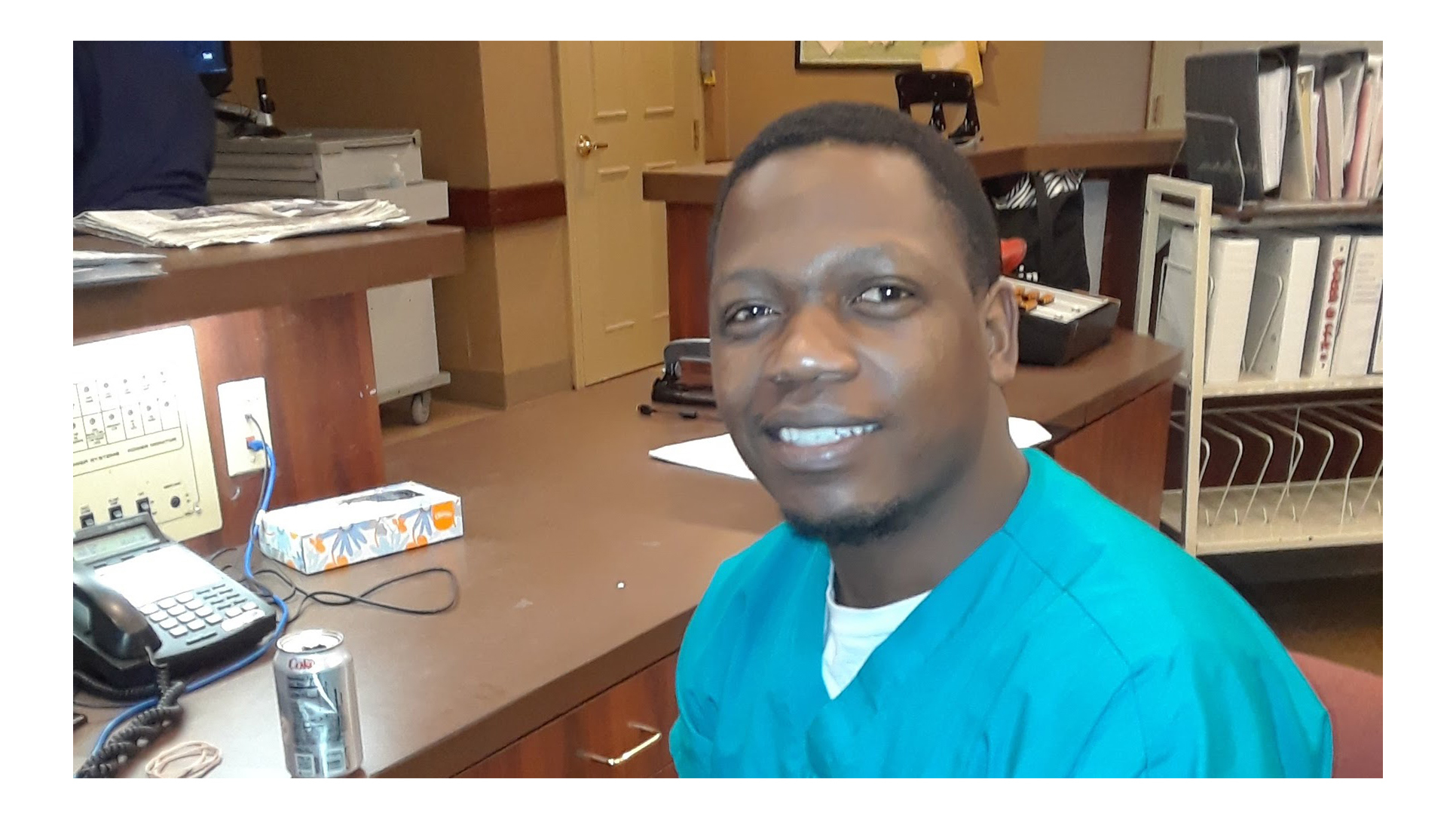
For a time, Alexander worked at a local nursing home that paid $10/hour. It was barely enough to afford his basic living expenses. Although he stayed with his relative, he still needed to pay his share of rent. While attending a local church he came across a flyer for Per Scholas Dallas and their free IT certification training. Alexander always had an interest in technology. Back home in Malawi, he and his brother dabbled with operating a small computer repair business providing computer technical support to locals. The business still operates to this day!
He was skeptical about the absolutely free training offered by Per Scholas as per the flyer. “I have been paying a lot of money for education and you’re telling me that someone is going to give me IT training for free?” Fortunately, the person who placed the flyer was both a member of the church and an alum of Per Scholas. They encouraged him to attend an upcoming information session for IT Support training.
Alexander held off applying in order to build up his savings to finance himself throughout the ten weeks of training. “If I was going to do this, I wanted to make sure that I had all the support I needed. That meant quitting my job and focus only on my training. I was still paying back a loan for the semester I attended in Boston.”
At times it was challenging, especially when taking public transportation. To get to class, Alexander needed to take a 15-minute bus ride which took him to a train station where he had to travel 45 minutes to the Dallas metro area. “Students were expected to adhere to the strict attendance policy, so I had to wake up very early to make sure I was on time.” Sometimes Alexander stayed late to work with his peers to finish assignments, but for him, it was worth it!
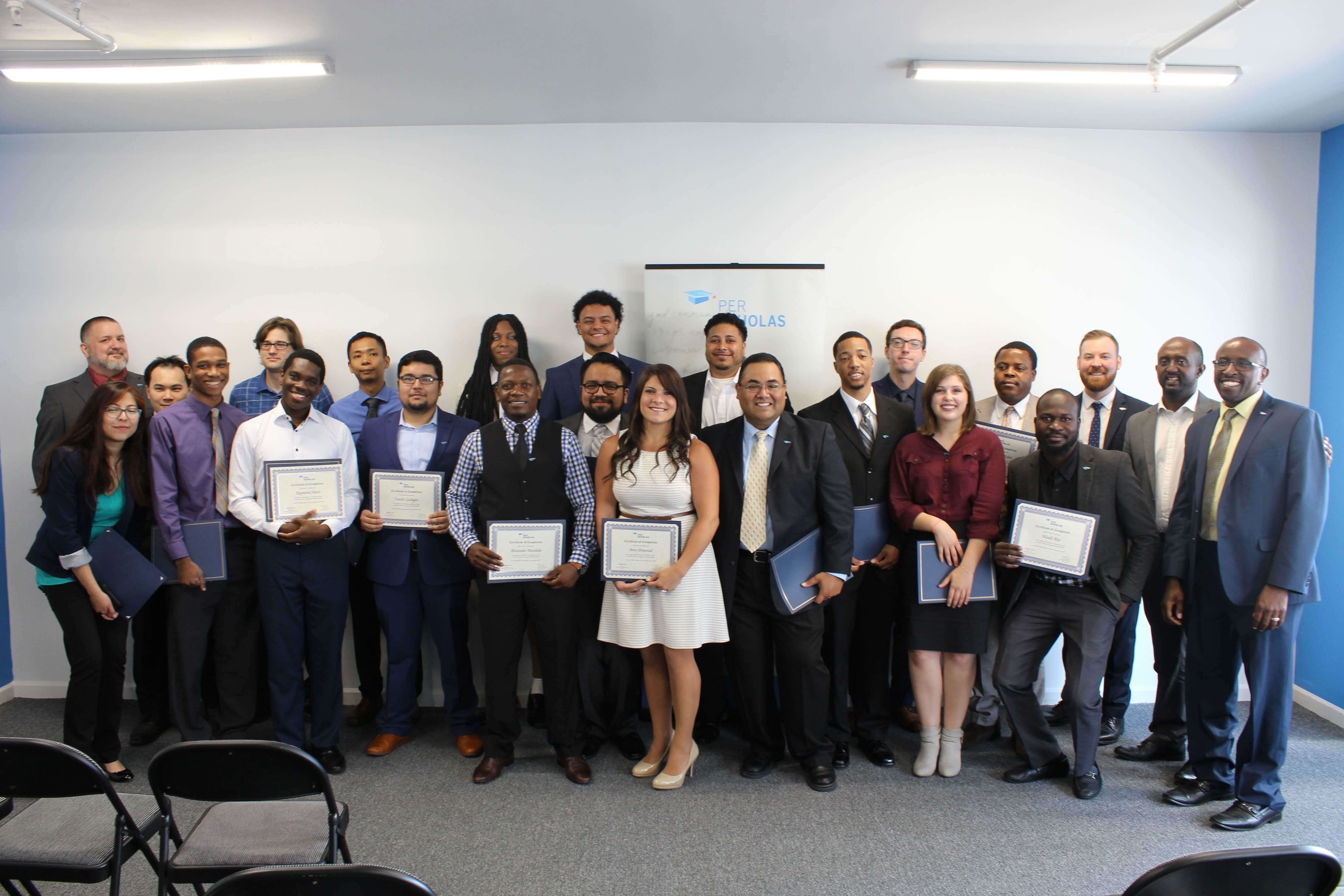
After passing his CompTIA A+ certification exam, he was ready to find a job. He uploaded his resume whenever he could, attending networking events to get his name out in the job market. Still, there were no offers forthcoming. “It tested the best of me. I was interviewing and getting calls, but no job.”
Capital Gain
A month after graduating, Alexander was called in to interview at Capital One. He was selected among 20 other applicants for a contract position. Six months into the role, he was brought on board as a full-time associate working as Senior Coordinator for Help Desk Support where he currently trains and helps to onboard new hires.
“I am grateful for my experience at Per Scholas Dallas. I am able to envision a professional future for myself. I’m proud to be an alum because I also get to see other students come out of the training and find career success. Even here at Capital One, on a different team, there is another Per Scholas graduate who started out as a team leader and was soon promoted to principal coordinator. That only speaks to the caliber of the training we received from Per Scholas. We do our best, but Per Scholas is what helped us to realize and maximize our potential.”
Alex currently works at Capital One as a Senior Coordinator for Help Desk Support and continues to learn more about the field and progress his skill sets. To learn more about our IT Support course and other course offerings, visit our apply page.