
Plinio Ayala Underscores Power of Partnerships at JobsFirstNYC’s “Adapting to Future of Work” Conference
On July 20, Per Scholas President and CEO Plinio Ayala joined visionary leaders for the JobsFirstNYC “Adapting to the Future of Work: Listen Up” conference, back in person for the first time since the onset of the pandemic. The annual convening featured workforce development professionals, employers, educators, policymakers, and philanthropists coming together to discuss how to create an adaptive and inclusive workforce.
Plinio shared his experience on a panel entitled, Adapting to the Future of Nonprofits, alongside Phoebe Boyer, President & CEO, Children’s Aid; Karen Ford, Executive Director, Mayor’s Office of Nonprofit Services; Lisette Nieves, President, Fund For The City Of New York; Chymeka Olfonse, Managing Director, Robin Hood Foundation; and Jerome Walker, Associate Director of Partnerships, Year Up.
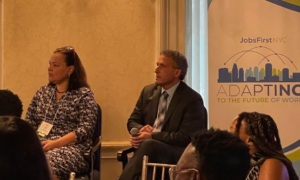
Throughout the panel, these nonprofit leaders explored the dynamic landscape of the nonprofit sector while lifting up emerging challenges and providing innovative solutions for the future. When asked about what the nonprofit sector needs to consider when cultivating partnerships as part of the future of work, Plinio discussed how partnerships are more valued now than ever before.
”Partnerships are no longer for the sake of partnership, but meaningful ones where everyone is winning and doing what they are good at,” Plinio shared. “Better alignment with the corporate sector requires robust dialogue with employers, partnerships that consider child care and stipends/loans for participating in programming, creating equity for all.”
Learn more about Adapting to the Future of Work and additional takeaways here!
Per Scholas Seattle Celebrates 16 Software Engineering Graduates
On July 14th, Per Scholas Seattle hosted its first in-person graduation celebration, honoring the 16 technologists from their very first Software Engineering cohort.
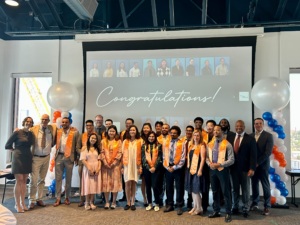
Per Scholas Seattle Managing Director Brian McRae welcomed graduates, alumni, colleagues, and partners and reflected on Per Scholas Seattle’s impact since launching in May 2021. He also inspired our newest Per Scholas Seattle alumni to embrace their bright futures in tech. This cohort joins the more than 230 Per Scholas Seattle alumni trained in a variety of skills including IT Support, Software Engineering, Java Development, and Cybersecurity.
“I couldn’t be more pleased with these graduates. From week one they exhibited such rare camaraderie and it was extremely exciting to watch them grow and develop throughout the program in such a collaborative way,” stated Brian McRae. “The graduation ceremony marked a very important milestone for Per Scholas Seattle. Being our first one, we wanted to make it extra special by having it at the Seattle Jobs Initiative’s beautiful space which overlooks the Puget Sound, Olympic Mountains, and downtown Seattle. It ended up being a wonderful, unforgettable day for this momentous occasion,” he reflected.
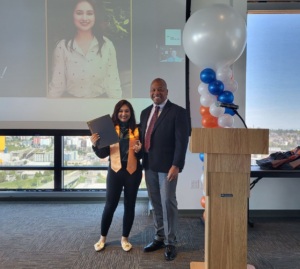
The graduation ceremony consisted of remarks and reflections from distinguished guests and encouraging words from Mariama Suwaneh, M.A., Assistant Director of the Office of Equity and Human Rights for the City of Tacoma; Jae Taylor, Founder & CEO at Mentor Mesh; Community Partner Remarks from Kevin Bromer, Ballmer Group; and Per Scholas Chief Development Officer Caitlyn Brazill.
Learn more about upcoming training opportunities at Per Scholas Seattle and apply by visiting PerScholas.org/Seattle.
JPMorgan Chase Hosts Innovative Workshop with Per Scholas Newark’s Cybersecurity Learners
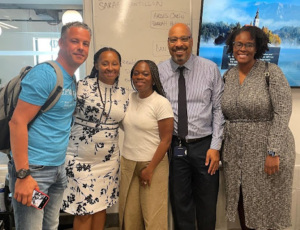
Earlier this month, Per Scholas Newark hosted JPMorgan Chase at our campus for an innovative corporate engagement workshop, Unlocking Opportunities in Cybersecurity: Guidance on Building a Successful Career. The event was organized by Per Scholas Newark Advisory Board member Farrah Patterson, who serves as Executive Director for Technology and Cybersecurity Operational Risk at JPMorgan Chase. Fifteen learners in our current Per Scholas Newark cybersecurity cohort benefited from the event.
Topics covered during the session included Power of Networking, Interview Preparation, Imposter Syndrome, and Elevator Pitches. Speakers shared authentic insights and invaluable tips on the organic way to approach interviews, guidance on mastering interviews with a memorable 30-second introduction, and advice from their personal journeys in technology, which serves as a powerful example of success for women and people of color in cybersecurity. This session afforded the presenters an extraordinary opportunity to give back and connect with future cybersecurity technologists.
The opportunity to increase equity here in New Jersey, through technology careers, is tremendous. At Per Scholas, we see technology as a tool to unlock potential, and to us, every company is a tech company. One of the major challenges is the lack of representation in tech, meaning individuals who participate in skills-based training, like the training we offer at Per Scholas, could be making a difference!
“JPMorgan Chase technologists, including our Advisory Board Member Farrah Patterson, understand the importance of diversifying tech,” Per Scholas Newark Managing Director Jessica Zorola stated. “This all leads to growing a technical workforce in the Garden State, and I’m very hopeful that other businesses in need of well-trained tech talent get in touch with Per Scholas.”
JPMorgan Chase colleagues Shawn McCredie, VP of Recruiting, Cybersecurity, Technology and Controls; Sarah Gentillon, VP of Digital Content Lead; Dan Tutt, Project Execution Associate, Cybersecurity; and Ardis Carlos, VP of Cybersecurity Community Engagement Manager, contributed their talent to help organize the workshop and provided industry insight to our cybersecurity learners. Farrah Patterson recalled how this Cybersecurity workshop was a great opportunity to inspire and guide learners as they prepare to enter the workforce. “We must support these students in achieving their career objectives together,” she said.
Per Scholas learner Asma Daif Allah reflected, “I want to express my heartfelt gratitude for the invaluable insights and guidance provided by the JPMorgan Chase & Co. team during the program. It was an amazing opportunity that has equipped me with essential knowledge and skills.”
If you’re interested in organizing a corporate engagement event with Per Scholas learners at any campus or virtually, please email rwilhelm@perscholas.org.
Online vs In-Person Classes: Weighing the Pros and Cons
The ever-evolving landscape of education has seen the increasing popularity of remote and hybrid learning options over the last few years. This initial shift was largely spurred by the Covid pandemic, but the popularity of online learning options has remained high as people recognize the benefits that this form of learning can bring.
That being said, there are still many unique benefits that in-person learning offers. A number of learning institutions, including Per Scholas, now provide options for in-person, online, and hybrid courses. When deciding which learning option you would like to pursue, it is important to understand the significance of choosing the right mode of education that aligns with your individual needs, preferences, and goals.
Below, we will outline some of the benefits and detriments of online vs in-person classes in order to help readers make a more informed decision about the learning option that best suits their needs.
Advantages of Online Classes
As previously mentioned, the prevalence of online and hybrid learning has risen dramatically in the past few years, primarily during, and in the wake of, the Covid pandemic. However, remote learning has existed in some form or another for much longer than many people may realize: the first web-based courses have been around practically since the advent of the internet, with Jones International University launching in 1993.
The idea of remote learning actually dates back even farther to the 19th century, when the University of London pioneered the idea of correspondence-based courses. Of course, advances in technology have since made remote learning much more accessible, immersive, and comprehensive, making it a valid alternative to in-person courses.
There certainly are benefits to remote learning, evidenced by its long history and increased prevalence in recent years. Many people were forced to switch to remote learning during the pandemic, but have chosen to adhere to the learning style, even after social restrictions have been lifted.
1. Flexibility & Convenience
 One of the primary benefits of remote learning is the flexibility and convenience that it provides. While Per Scholas’ remote courses are not self-paced, they do allow learners to attend from the comfort of their own homes. This can be a great benefit, particularly for parents who do not have alternative forms of childcare, allowing them to stay at home with their families. Some people may also find that they learn better in their own homes, without the distractions that can arise from classmates and in-person class settings. This is, of course, specific to the individual and their unique learning style.
2. Increased Accessibility
Remote learning is also a wonderful way to increase accessibility to courses, allowing individuals to start a tech career without having to commute. This opens up learning options for those who lack access to transportation, those who cannot factor a commute time into their schedules, and those who live farther from campus locations, allowing them to participate in learning opportunities they otherwise would not have access to. Furthermore, individuals engaged in remote learning may also benefit from a greater course variety, as remote learning can offer them access to a wide range of programs, resources, and courses, which may not otherwise be available in their immediate vicinity.
3. Course Variety
Per Scholas offers a variety of tuition-free remote and hybrid classes for those that qualify. We offer a remote Desktop Support course and a Java Developer course Nationally, accessible to those living anywhere within the U.S. Our 22 individual campuses across the country also each offer a selection of in-person, remote, and hybrid courses, available to those who live within a certain proximity to the campus. Check the campus page nearest to you to see which courses are available!
Disadvantages of Online Classes
Of course, while remote learning has many benefits, there are also drawbacks associated with this learning style that should be taken into account when considering signing up for such a course.
1. Availability Restrictions
The first things to consider are learning style and course options. While some exercises can be replicated in an online setting, opportunities for hands-on learning are limited by remote training. This may be difficult for those who learn best from a direct, hands-on approach.
This may also restrict the type of course that you take, as some disciplines specifically require a hands-on component.
At Per Scholas, for example, our courses that require learners to interact directly with physical computer components, such as our IT Support course, typically only offer an in-person or hybrid option.
2. Lack of Collaboration and Engagement
In the same vein, some individuals may learn best when they are able to engage face-to-face with an instructor, rather than through a computer screen. Similarly, although interaction and collaboration opportunities with classmates are part of both our remote and in-person courses, some individuals may find it more difficult to collaborate and build relationships with peers through an online setting.
3. Maintaining Accountability with Distractions
Finally, a large requirement for remote learning is the ability to self-motivate and hold oneself accountable for showing up to class and completing assignments in a timely manner. Without the structure imposed by an in-person classroom setting, some people can struggle with the self-discipline needed to adhere to a class schedule. Furthermore, homes and other environments beyond the classroom can be full of distractions, which may make it hard to focus on coursework. It is ultimately up to the individual to determine whether or not this type of learning environment and structure is feasible for them.
Advantages of In-Person Classes
While the flexibility and variety that remote learning options present can be the right fit for some, there are also a great many advantages to traditional, in-person learning.
1. Hands-on Training and Face-to-Face Networking Opportunities
As mentioned above, remote learning can lack the hands-on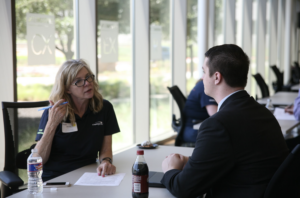 component that some find most conducive to their learning style. In-person courses offer learners the opportunity to perform direct, physical, hands-on training exercises, which can be the most beneficial form of learning for some. In-person courses also provide learners the opportunity to interact face-to-face with their instructors and receive immediate feedback on their work.
To those who thrive in such settings, in-person courses can offer greater opportunities for networking and collaborating with peers, building interpersonal skills, and participating in group discussions, as well as the ability to work together on projects that mimic an in-person workplace setting.
Per Scholas courses also contain opportunities to network with and perform mock interviews with industry experts, and some learners may find it most beneficial to take part in these activities in an in-person setting.
2. Classroom Setting Provides Structure
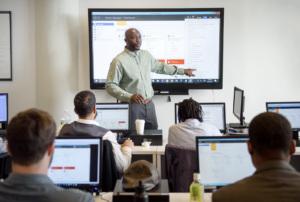 Finally, in-person classes contain the structure, highly-focused environment, and physical resources that remote courses lack. Some learners may find it difficult to remain motivated and engaged in a remote setting, where a computer screen is the only thing holding them accountable for staying on task. In-person courses can be more conducive for those who require the structure of a classroom environment and schedule.
Most of our 22 campuses offer in-person and hybrid course options. Check the campus near you to see which courses are available in your area!
Disadvantages of In-Person Classes
While there are many benefits to in-person classes, as with remote classes, there are also some associated disadvantages.
1. Commuting Daily
In-person classes require a commute, which may be limiting to those who live farther from campus, lack transportation options in their area, or experience mobility limitations. Although Per Scholas can help learners with transportation costs, factoring a commute into the day is not always viable for all learners. Attending in-person classes may also be difficult for parents with childcare requirements or those who, for whatever reason, need to be home during the day.
2. Class Availability and Limitations
In-person course options may also be limited in particular areas, and are not always as readily or widely available as remote courses.
Making an Informed Decision
When deciding which sort of course to take, it is important for your decision to be informed, in order to make the best choice for your particular needs. There are benefits and detriments to both online and in-person courses. A variety of factors should be taken into account when weighing your options.
 These factors include, but are not limited to, your individual learning preferences, lifestyle, transportation options, program availability in your area, career goals, and support system.
Someone with kids, for example, might benefit from online classes because of the flexibility it offers, or because it allows them to not have to set up childcare. Alternatively, someone that has the time and resources available to commute and to spend their days in class might prefer to attend an in-person class due to the hands-on learning experience it offers.
Many of the courses offered at Per Scholas allow our learners the option to choose between online, in-person, or hybrid learning. Choosing between an online vs in-person class takes consideration into your own lifestyle and what kind of learning environment is best for you.
Launch Your Tech Career with Per Scholas
As discussed, there are pros and cons associated with both in-person and online courses. Online courses can offer greater flexibility, more course options, and the ability to study from home, but may lack hands-on learning experiences, a structured learning environment, and the ability to network and interact with classmates and instructors face-to-face.
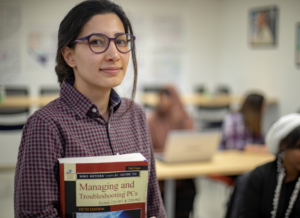 Alternatively, in-person courses are great for hands-on learning, networking and collaboration, and providing structure and accountability, but can lack course variety and flexibility. It is up to the individual to weigh these pros and cons of online vs in-person classes, and determine the course style that best suits their needs, learning style, career goals, and lifestyle.
Whether you’re upskilling or reskilling, Per Scholas offers remote, hybrid, and in-person course options, enabling learners to select the best style of course for their specific needs. Be sure to check the campus nearest to you to view your online, hybrid, and in-person course options, as well as our remote national courses.
Click here to sign up for our upcoming courses that fit your remote or in-person preference.
Per Scholas’s Expansion to Houston’s Ion District Highlighted in the Houston Business Journal
Per Scholas has received a warm welcome to the Houston community, where we will be launching our first cohort this October at our new campus in Houston’s Ion District.
Our expansion to Houston’s Ion District was featured in the Houston Business Journal – read Sofia Gonzalez’s article here!
Per Scholas Houston’s New Campus in Houston’s Ion District Featured in Community Impact
We are thrilled that the launch of our new Per Scholas Houston campus was featured in Community Impact!
Per Scholas & TEKsystems: Four Tips for Evaluating Your Diversity, Equity, and Inclusion Strategy
While many companies have mentioned diversity, equity, and inclusion (DEI) as a priority, less than half of organizations have a mature DEI strategy in place. Together with TEKsystems, we created a helpful infographic to empower organizations to consider a true commitment to a diversity program from activating a plan, implementing change, and assessing your progress.
Check out our four tips for evaluating your diversity, equity, and inclusion strategy
Per Scholas Participates in JFF Horizons 2023 Without Limits
Earlier this month, Per Scholas was proud to attend and present during several sessions at Horizons, Jobs for the Future’s premier national platform for ideas and action that drive equitable economic advancement for all. This year’s theme, “Without Limits” inspired attendees, encouraged collaboration, and jumpstarted solutions for essential work ahead. Per Scholas Chief of Staff Tamara Johnson and Per Scholas Director of Development Kevin Aspegren attended the summit to gain key industry knowledge and insights aligned with Per Scholas’ commitment to unlocking potential for our learners, alumni, communities, companies, and economy.
Per Scholas Chief Development Officer Caitlyn Brazill spoke during a Pre-Session Panel centered on Skills-First Education and Work with leaders from JFF, Franklin Cummings Tech, and Opportunity@Work, encouraging attendees to embrace skills-first learning and hiring and consider the positive impact to advance Black learners and workers.
On the first day of the conference, Regional Senior Vice President Noah Mitchell shared his insight during the Partnering with Employers to Rethink Talent Pipelines Workshop, sponsored by Charles Koch Foundation. Moderated by Andy Tonsing, Director of Postsecondary Education at Stand Together, Noah was joined by Daniel Cervantes, Senior Vice President of Skills for America’s Future to bring participants through a thought exercise to consider innovative ways to build employer partnerships.
Noah reflected, “The Workshop was energetic, and participants brought really creative approaches to the discussion. The ability to share just one unique way Per Scholas partners with businesses – in rethinking talent pipelines by developing tech apprenticeship programs – was incredible, and I know it sparked ideas of collaboration for the future. When we invest in programs that work, we all win.”
Caitlyn participated in a panel discussion, moderated by Dan Kamins, Senior Director of Strategic Partnerships at Comcast, titled “Iteration and Innovation: Expanding Access to Digital Jobs,” joining leaders from AZ Cyber Initiative and Hampton Roads Workforce Council. The session convened practitioners, employers, and training and credential providers to share best practices and strategies to increase the number of Black, indigenous, Latinx, people of color, women, LGBTQIA, and other populations underrepresented within the IT industry.
Common themes throughout Horizons included Artificial Intelligence, skills-based hiring, the importance of digital skills, equity, and considering what individuals can do “without limits” in hiring, training, developing, and retaining talent.
JFF Horizons sparked many essential conversations around creating economic equity and advancement for all. Per Scholas was thrilled to attend the conference and even more so to share our insight on unlocking potential within our learners by empowering them with new digital skills and sparking new ways of engaging with employer partners.
Tearing the Paper Ceiling: Let Skills Shine
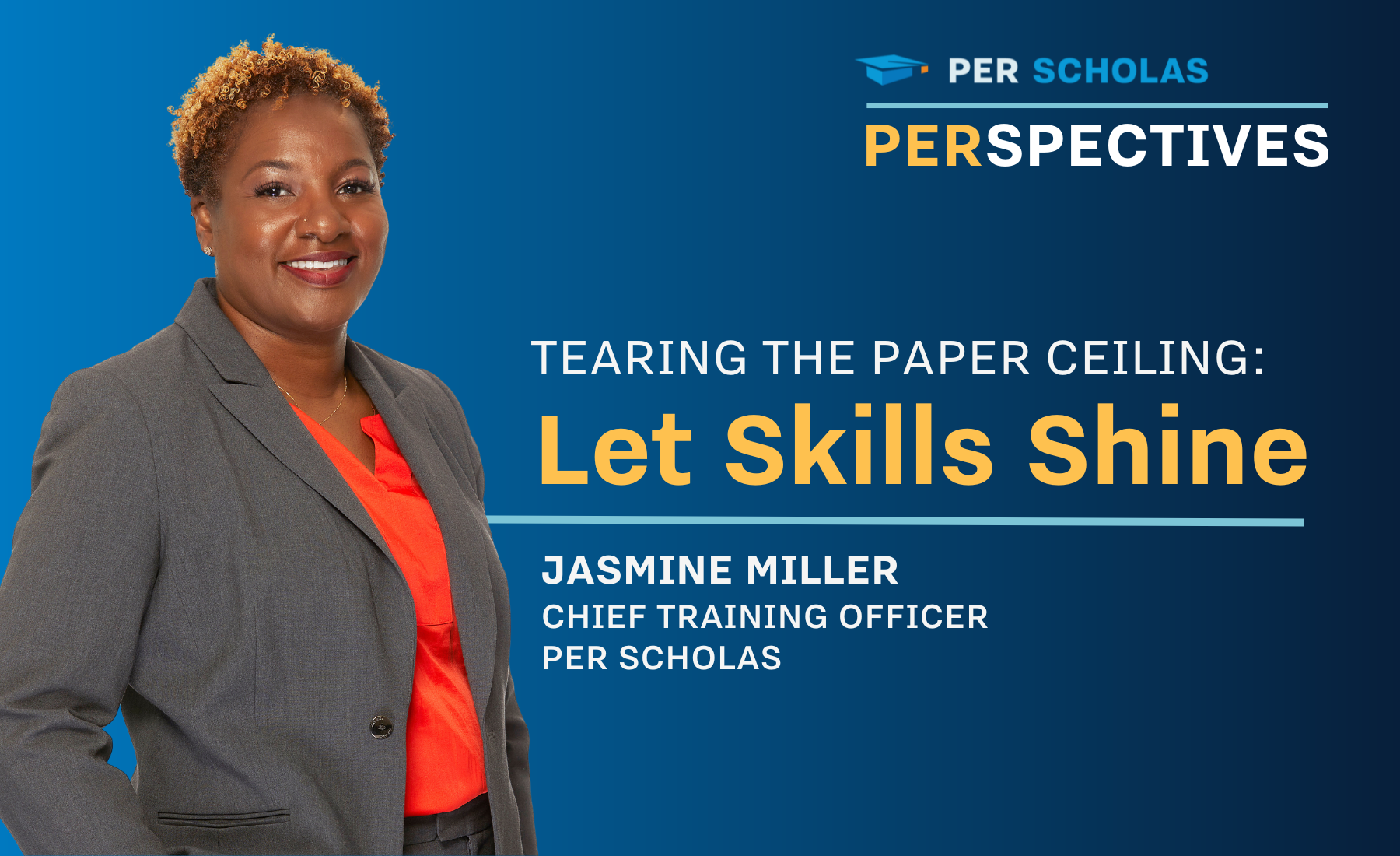
Tearing the Paper Ceiling: Let Skills Shine
Skills are powerful. In its purest form, a skill is the ability to do something well. Let’s take my son’s favorite sport into consideration: soccer. Some skills are natural, like body-balance and coordination. Others are learned, improved, and refined over time, like dribbling, trapping, and teamwork. His favorite player, Sadio Mane of Senegal, has an innate ability, but has also dedicated his focus to develop and perfect his skills over time.
For too long, skills have been overlooked and undervalued in the American hiring process, relying on proxies for preparedness in place of proof of preparedness. That’s why I’m so proud of our friends at Opportunity@Work for their unwavering commitment to rewire the labor market so that everyone can contribute their skills, talent, and energy in pursuit of a better life, an equitable America, and a stronger economy for all.
Tearing the Paper Ceiling and Unlocking Potential for STARs
O@W is galvanizing our nation to Tear the Paper Ceiling and recognize the untapped potential of the 70+ million American workers who are STARs – Skilled Through Alternative Routes. STARs make up half of the U.S. workforce and for decades, have been excluded from good, high-wage jobs. STARs grow skills and knowledge through community college, proven workforce training programs like Per Scholas, bootcamps, certificate programs, military service, on-the-job learning, and more.
According to a recent survey by Indeed, two thirds of job seekers across the nation believe they were overlooked for a job they were qualified for because they did not have the degree listed in the job description. We’re stifling potential instead of unlocking it, creating even greater opportunity gaps.
Because Per Scholas is a tech and essential skills trainer, let’s examine the facts facing our nation’s technology workforce. The most recent jobs report reveals there were 234,000 tech job openings in April, far outnumbering the number of applicants. I’d surmise that many STARs didn’t even apply, seeing a college degree as a minimum requirement to put forth their credentials. It’s disheartening.
As Chief Training Officer at Per Scholas, it’s our learners and alumni who fuel my passion. More than half of our learners are STARs, and the skills they’ve acquired during our 12 to 15 week tuition-free training stand on the shoulders of the skills they already possess: perseverance, time management, tenacity, passion, collaboration, problem-solving and beyond. Plus, they earn a variety of CompTIA certifications – industry recognized credentials that again, prove their mastery of the skills they’ve learned in their training.
Learners like Brittany, who knew a career in tech was for her, and what would provide the economic freedom for her family. Brittany brought resourcefulness, resilience and an inquisitive attitude to her IT Support training every day. She worked the overnight shift, cared for her young daughter, and always arrived to training early, ready to shine.
Hearing stories and experiences like Brittany’s – and thousands of Per Scholas STARs – motivates me in my work, advocating for skills-based hiring.
Solutions for Skills Based Hiring
A year ago, Maryland passed a bill that eliminated degree requirements from thousands of state job postings, far increasing the application pool and ultimately creating more equity. And valuing people for the skills they bring to the table, not the piece of paper. I’m hopeful many more leaders in the public sector will follow suit. I’m encouraged that many private sector companies, from Intel to Amazon and Dell to Google are removing 4-year degrees as a mandatory requirement for a variety of technical roles. This powerful action unlocks potential and creates pathways to a strong middle class.
Employers are the key change agents here, and they win by gaining a more productive and thriving workforce if they’re brave enough to activate skills based hiring. I think Henry Ford said it best: “If you do what you’ve always done, you’ll always get what you’ve always got.” If we continue to exclude talent from the onset, we’ll continue to have hundreds of thousands of open tech jobs each month.
In 12 to 15 weeks, Per Scholas learners graduate from our rigorous, tuition-free tech skills training in a variety of the most in-demand disciplines our tech sector needs: Java Development, Cybersecurity, Software Engineering, IT Support, Salesforce Administration, and more.
It’s the essential skills they refine, like professionalism, perseverance, creative problem solving, and the hard skills they learn like pen testing and networking protocols that make Per Scholas STARs tip-top applicants. Our graduates are ready to make a difference day one on the job.
Let their proven skills training with Per Scholas serve as the proof of preparedness. Let STARs shine.
Per Scholas Baltimore’s Training and Development Featured in Technical.ly
Per Scholas Baltimore, led by Managing Director Jessica Diaz Council, was featured in Technical.ly Baltimore, highlighting their skills training and professional development aspects. The Baltimore campus holds mock interviews and headshot lounge sessions in addition to our tuition-free tech training.
The article also noted Per Scholas Baltimore’s efforts to close the diversity gap in tech and recent Bank of America Neighborhood Builders award and featured alumna LaLonnie Moseley’s story.