
TD Bank Leaders Volunteer with Per Scholas Learners for Mock Interviews
On May 15, more than 25 leaders from TD Bank volunteered their time and participated in mock interviews with a Cybersecurity Cohort of Per Scholas learners from Atlanta, Newark, and Boston. Corporate volunteerism is critical in Per Scholas’ training and provides an opportunity to connect with business leaders and gain industry insight.
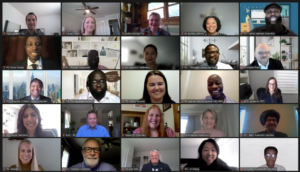
TD Bank leaders had a chance to give back by helping aspiring technologists improve their communication skills, learn about key technical content, and better understand varied corporate cultures. Volunteers had the opportunity to provide insight on their technical skills, social and emotional intelligence at work, and career pathways through mock interviews. The advice and insight given greatly impacts Per Scholas learners. Through this interaction, learners are able to increase their knowledge about a corporate environment and gain valuable practice speaking with a working technical professional.
To learn how you can volunteer with Per Scholas, reach out to Robert Wilhelm at rwilhelm@perscholas.org.
Per Scholas Receives Funding from Citizens Philanthropic Foundation for Alumni Upskilling Program
Earlier this spring, Per Scholas received $50,000 from the Citizens Philanthropic Foundation for our Per Scholas Alumni Upskilling program, which provides continued support to our alumni after they leave Per Scholas. Focuses of the program include access to career and financial counseling, upskilling courses, and more.
This funding was part of a commitment by Citizen Bank’s Citizens Charitable Foundation and Citizens Philanthropic Foundation to grant $350,000 to support technical training and career counseling in the state of New Jersey. Other funding recipients included Greater Newark LISC, Urban League of Essex County, and Year Up New Jersey.
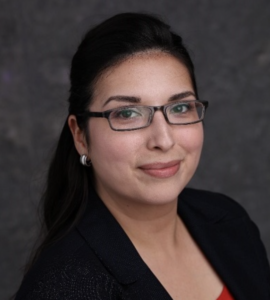 Jessica Zorola, Per Scholas Newark’s Managing Director, was interviewed by NJ Tech Weekly about Per Scholas’ participation in this grant program. “As a result of the investment from the Citizens Philanthropic Foundation, Per Scholas is going to be able to grow our alumni upskilling offerings for individuals here in Newark and the surrounding New York City metro area,” Jessica said. “People who have graduated from Per Scholas want the opportunity to move around in the tech industry, and to qualify to move up the ranks. If you think about careers in tech, they are constantly changing and evolving, so learners need to acquire more industry-recognized certifications, building a little bit more of that skill set to build careers over time.”
Jessica also emphasized the importance of grants like this in helping Per Scholas and other similarly-focused organizations promote equity in tech employment in New Jersey. In an industry that is predominantly white and male, it is important to increase opportunities for female and minority learners to thrive. “When I talk with our learners and alumni, I’m very open and honest about addressing the challenges of this lack of representation,” Jessica told NJ Tech Weekly. “You know, only 4 percent of technologists nationwide identify as women of color like myself. So, when I have my learners in the classroom and hear their stories, it can feel very impactful and powerful because they are bringing in that representation that is missing in tech.”
Read the full news article here!
Per Scholas Per Scholas Executive Vice President of Diversity, Equity, Inclusion, Belonging, and Culture Ken Walker Moderates Panel at City & State NY 2023 Diversity Summit
This month, Per Scholas Executive Vice President of Diversity, Equity, Inclusion, Belonging, and Culture Ken Walker moderated an innovative and important panel for the City & State NY 2023 Diversity Summit. The summit featured conversations and panels centered around diversity in New York with local government and business leaders.
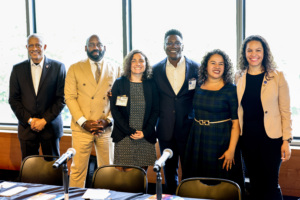
The panel, Emerging DEI Practices in New York, highlighted ways New York is working harder than ever to implement inclusive hiring practices and DEI frameworks to make sure that all environments are diverse. Panelists included Wendy Garcia, Deputy Commissioner, Equity and Inclusion, New York City Police Department; Sadye L. Campoamor, Chief Equity Officer, Office of NYC Comptroller Brad Lander; May Boucherak, Principal, KPMG; Larry Scott Blackmon, Vice President, Fresh Direct; and Kwame Cooper, Chief Diversity & Inclusion Officer, Fire Department Of New York.
Check out the full list of speakers and panel discussions here!
Per Scholas Receives Digital Revolution Award for Excellence in Learning and Development
Per Scholas is thrilled to announce that we have received Tenth Revolution’s Digital Revolution Award for Excellence in Learning and Development! The Digital Revolution Awards was founded in 2020 to applaud excellence across the global cloud tech ecosystem, and we are proud to join past recipients to drive excellence in learning and development in the tech industry.
We are honored to be among the recipients of the various categories for the Digital Revolution Awards and are grateful for our partnerships that encourage our growth and trainings’ development.
Per Scholas Partners with Indeed for Skill Connect to Promote Skills and Training Programs with Employers
Per Scholas is proud to announce a new partnership with Indeed for their new product, Skill Connect, to help job seekers without college degrees better promote their skills and completed training programs to potential employers.
“Skill Connect is a powerful tool, blazing the path for individuals to be evaluated based on their ability to excel with their skills, instead of relying on proxies for preparedness,” Per Scholas President and CEO Plinio Ayala reflected. “Per Scholas is proud to partner with Indeed on this innovative experience and looks forward to seeing positive impact among job seekers and companies alike.”
Read the full press release for this innovative tool here.
The battle between credentials and skills can be navigated through Indeed’s latest blog, which highlights overcoming barriers in the job application process.
Per Scholas New York Managing Director Debbie Roman Talks Tech Training & Talent Development on NY1
Per Scholas New York Managing Director Debbie Roman discussed our tuition-free tech training on NY1, the 24-hour news network dedicated to NYC, with anchor Ruschell Boone. In her interview, Debbie shared information about Per Scholas’ footprint in New York and our accessibility to individuals in all five boroughs through our innovative satellite training model. She also reflected on how diversity, equity, inclusion, and belonging are at the core of Per Scholas and is reflective of the community and culture that lives in New York City.
The feature was during a Women Wednesday segment, where Debbie was highlighted as a woman leader, and she reflected on her 15-year career in workforce development following her move from Puerto Rico.
Tech Jobs Remain Hot, but Diversity Gaps Remain Prevalent
Tech Jobs Remain Hot, but Diversity Gaps Remain Prevalent
A Per Scholas Perspectives Piece from Damien Howard
Despite layoffs in the first quarter of 2023, the tech job market remains hot! According to the April jobs report, there are more than 316,000 open tech roles nationwide. Yet, companies continue to struggle to find the skilled talent to fill these roles. And in my view, many companies are unfortunately still overlooking valuable and performance driven diverse technologists to fill these roles.
Nationwide, Black people only make up 8 percent of the technology workforce, and that percentage is even lower – 3 percent – when you look at Black technologists in the C-Suite. The percentage of women in technology jobs nationwide continues to hover around 25 percent, and again, representation among women of color is at a devastatingly low 4 percent.
My friend Franklin Reed, Executive Director of Global Inclusion, Diversity and Equity at TEKsystems, and I are always innovating solutions on this topic, to achieve our shared goal of a more equitable, inclusive, and diverse technology workforce.
Here are our three major takeaways this April, Celebrate Diversity Month, from TEKsystems’ inaugural Diversity, Equity and Inclusion in IT Report that can help close diversity gaps.
First, IT decision makers believe in the power of diversity. 86 percent of IT decision makers believe DEI programs have made their culture more inclusive, which aids business’s overall ROI and morale. Plus, 74 percent of IT decision makers agreed that DEI has increased their team’s productivity.
“Cultivating a diverse culture starts with a genuine belief that diversity makes us better, followed by intentional recruiting efforts that reinforce this belief,” says Franklin. In this article, Franklin and his colleague discuss a programmable approach to inclusive and equitable recruiting.
Next, there’s tremendous opportunity to implement advanced or mature DEI programs. Less than half (46 percent) of organizations reported having advanced or mature DEI programs, which translates into a missed opportunity for innovation and increased profit for the vast majority. Per Scholas and TEKsystems are leaders in DEI, and can help support your company in developing and implementing powerful talent solutions.
“There is no quick fix to attracting, recruiting, and retaining diverse candidates. Change comes from deep within an organization, and it takes time. It also takes an honest evaluation of where your company currently is with its DEI practices and where the stakeholders want it to be,” Franklin says.
Like Franklin, I often counsel leaders that are looking for different ways to drive revenue that DEI can’t be an initiative or a scattershot effort, but instead, embedded into the DNA of your company, with business metrics and resources to support sustainable success.
Finally, much more needs to be done to support women technologists. There’s a 25 percentage plus point gap between male and female technologists when they indicate their sense of belonging at work, and an even larger gap between men and women related to their perceptions of growth opportunities.
Beyond racial and gender diversity, there are so many other diversity dimensions we must consider and take into account, from neurodiversity to educational attainment, family composition, and more.
So, what’s your take? What are ways your company is closing the diversity gap among your technology workforce? Franklin and I would love to hear from you. Drop a comment below!
Apex Systems Volunteers with Per Scholas Alumni
In April, Apex Systems volunteered their time with Per Scholas Alumni nationwide for a virtual volunteer event. The hour-long event was led by Kaitlin Westbrook Tolson, National STEM advocate of Apex Systems, and included a presentation on how to work with technical recruiters. More than 40 alumni and volunteers attended in total to increase professional experience in the tech industry with technology professionals and was an exceptional opportunity for alumni to network and gain industry insight.
Corporate engagement events such as this volunteer opportunity with Apex Systems are a great way to partner with Per Scholas and unlock potential in our learners. To learn more about how you can volunteer with us or host a corporate engagement event, please reach out to Per Scholas Director of Corporate Engagement Miguelina Manriquez at mmanriquez@perscholas.org.
The Future is Diverse: How Creating Diverse Teams Will Change the Face of Tech and Promote Profitability

The Future is Diverse: How Creating Diverse Teams Will Change the Face of Tech and Promote Profitability
The past two months have presented multiple moments of reflection and consideration as I have personally thought about Black History Month in February and Women’s History Month in March. With Per Scholas, I have had the opportunity to commemorate these important moments through our Black Futures Month and Women’s Futures Month initiatives, as we bring light to the stark disparities facing Black and women technologists across the sector. I am able to stand on the shoulders of Black women who paved the way for women like me, look back at their accomplishments, and consider what the future holds for both diversity groups with excitement coupled with the understanding that there is still so much to be done.
According to the latest research from Boston Consulting Group, diversity is a key driver of innovation, finding that diverse teams produce a minimum of 19% more revenue. However women in the technology sector continue to hover around 28% of workers nationwide, and Black talent makes up only 8% of the technology workforce. Considering these dire statistics, it’s safe to say that there’s room for improvement in diversifying the tech workforce. I recently hosted Per Scholas’ Black Futures Month and Women’s Futures Month Roundtables and learned so much from my guests. Below, you’ll find my four takeaways.
Black Technologists From Days Passed Remain Motivation for Black Futures
During Per Scholas’ Black Futures Month Roundtable in February, I was joined by panelists Athenia Figgs, Senior Technology Leader at EY; Damien Howard, Per Scholas Chief Enterprise Solutions Officer; and Oche Idoko, Director, Americas, of Cyber, Technology, Data, and Change Risk at Barclays, to celebrate the contributions of Black technologists past and current, as we do our part to create Black tech futures. Our panelists each acknowledged Black technologists they admire, which illustrated the many ways Black Futures are fueled by Black History.
Additionally, as our panelists discussed the work of past Black technologists, we considered our own journeys working alongside the tech industry and how we could diversify the tech landscape for the future. Prior to joining Per Scholas, I found myself being very passionate in advocating for others. That is what led me on my journey to being a DEI practitioner, joining as Senior Director of Per Scholas Diverse by Design last summer. The power we hold to change both the perception and the reality for so many diverse technologists is humbling.
Diversity, Equity, Inclusion, and Belonging are Driving ROI
In recent years, there has been a massive investment into diversity, equity, inclusion, and belonging, and the research is clear. Diversity makes good business sense; so good that McKinsey and Company research revealed that companies in the top quartile for ethnic and racial diversity in management were 35% more likely to have financial returns above industry means. Considering such a high return on investment is incredible, and one that can be achieved when organizations embrace DEIB&C, diversify their workforce, and move forward from announcing diversity initiatives into driving action and results.
One aspect of a company’s return on investment comes from the pillars that diverse teams are smarter and more innovative. A Harvard Business Review article lifts up recent studies that prove diverse teams are smarter, lead to improved group thinking, remain objective, and are more innovative, leading to more revenue-generating opportunities for companies big and small. Another perspective is how diversity gives businesses a competitive advantage. Companies with a diverse workforce can better connect to different customer groups, therefore increasing market share. It’s a key factor in achieving a competitive edge by bringing new perspectives and fresh ideas, increased market knowledge, improved team dynamics, talent acquisition and retention, and better brand reputation overall. Athenia Figgs mentioned, “Companies have tech goals that are linked to outcomes with revenue and efficiency. We showcase the experience of practitioners on teams, and because the team is diverse, results show that they are more stable and have solutions. People come up with interesting solutions because they are a diverse team.” With new perspectives and remembering the history and contributions of past Black technologists, we can enhance Black Futures in tech.

Women Technologists are Diversifying the Tech Industry
This Women’s History Month, we brought to light the best practices, strategies, and solutions to create more Women tech futures. I hosted the Women’s Futures Month Roundtable with panelists Jamie Feldman, Senior Vice President, Enterprise Sales & Account Management at Per Scholas; Maria Medrano, Co-Founder & CEO, Inspirame; and Rashida Ricks, Vice President of Strategic Engagement and Inclusion, CGI Federal. Between all of us women and our involvement in leading the way to create a space for more women to be in tech, I am confident that we will continue to see the number of women in the tech landscape grow.
At Per Scholas, we’re in the business of unlocking potential and changing the face of tech. That’s why this Women’s History Month, we celebrated the contributions of women technologists from past to present for Women’s Futures Month. I’m proud to share that in 2022 alone, Per Scholas trained 1,545 women technologists for high-growth careers, creating strong women futures and contributing to their companies’ bottom lines and their local communities. Nationwide, more than 40 percent of our learners identified as women. But so much more needs to be done.
A Sense of Community, Resources, and Organizational Support Will Take Us to the Next Level
One consistent theme of our Women’s Futures Month Roundtable was community. All of our panelists stressed the importance of “finding your tribe” as women and building a support system from leaders and mentors – both female and male. This was an important takeaway for me because it is important to provide support, understanding, and resources as a business for women to have a sense of belonging and feel important. When women feel empowered and supported, there is nothing we aren’t capable of doing. What made our Roundtable unique was that it didn’t just represent women; it represented minority women. By being part of the Roundtable, we were able to show that Black and Latina women have a place in technology as technologists.
One powerful recommendation I made from Jamie Feldman’s remarks was to join an ERG (employee resource group), and if there wasn’t one that fit what you were looking for, to create it yourself. This sense of community and empowerment is key for leaders in an organization to build so women will thrive at work. The ambition of women is unmatched, and as we encourage more women in the tech landscape to voice their ideas and challenge the status quo, there will be profitability and success for your business, which inspires me as a woman of color.
The Future is Bright!
With the messaging from the leaders from Per Scholas’s Black and Women’s Futures Months Roundtables, I am hopeful for a diverse and inclusive future in tech. There is still work to be done to improve on statistics and DEIB&C initiatives at various organizations, but with the ideas our panelists mentioned and leaders like them working to make a difference in diversity, the future is bright. To see some of my favorite moments from the Roundtables, visit the Per Scholas YouTube page! We have more events like this planned to open the doors for more conversations centered around diversifying the tech landscape – stay tuned for our Hispanic Futures Month Roundtable this fall!
Per Scholas Featured by NPR!
Every company is a tech company and in need of skilled tech talent. Per Scholas was proud to welcome NPR National Labor and Workplace Correspondent Andrea Hsu to our National Capital Region campus recently to connect with learners about their aspirations for careers in technology.
Per Scholas President and CEO Plinio Ayala discussed how every company is a tech company and how, despite the mass layoffs from tech companies, there are still hundreds of thousands of tech jobs available throughout the country. Additionally, Per Scholas Instructor Keionna Yarborough and three current Per Scholas learners Elizabeth Mabrey, Michael Gomez, and Johntel Brandy, shared their experiences as technologists.
Read Andrea’s insightful piece, or listen to her reporting on the Consider This Podcast!