
House Committee Brings Long-Awaited Workforce Changes Into 2024
House Committee Brings Long-Awaited Workforce Changes Into 2024
ICYMI: Just before the new year, some remarkable action happened in Congress. Two bipartisan bills succeeded past the House Committee on Education & the Workforce, both aimed at increasing opportunities for Americans to get the skills employers need for our economies to thrive. We are excited about the movement of these two bills because it is a step in the right direction for America’s workforce—but there is still more work to be done.
The House Education & Workforce Committee passed A Stronger Workforce for America Act (H.R. 6655), which amends and reauthorizes the Workforce Innovation and Opportunity Act (WIOA), the nation’s cornerstone legislation that drives billions of federal funds into our national workforce development system. We’re thrilled to see this progress and offer our full support to Congress in ensuring that America’s workforce system sees a long-overdue modernization.
Per Scholas provides tuition-free, full-time training that opens a door for Americans who are committed to launching a career in technology to gain the skills and networks they need to succeed. For 28 years, Per Scholas has consistently helped adults increase their incomes 3x, and returns $8 in economic benefits for every $1 spent on training.
While our learners contribute their time, energy, and their tremendous skills, our donors and employers cover the costs associated with training because we believe that economic mobility shouldn’t be packaged with financial debt.
With our proven model, Per Scholas has been able to increase our scale of 2000 adult learners per year in 2020 by 150%—that means we’ll reach more than 5,000 immersive learners next year, plus 2,000 alumni committing to upskilling. But to keep this momentum in our training, we need our government to invest federal dollars in the right places.
H.R. 6655 will make it easier for the current workforce system to support cohort-based, demand-driven models like Per Scholas. The newest provisions create stronger alignment for workers, training providers, and employers. In fact, several changes in the bill are a direct result of the advocacy Per Scholas and peer organizations have been undertaking over the last few years, as highlighted in our organization’s letter of support to the Committee.
A Closer Look at H.R. 6655
Thanks to these collective efforts, the bill would:
- Prioritize WIOA spending (50%) on skills development for adult participants and create better clarity around performance measures, including program completion and employment outcomes;
- Streamline the Eligible Training Provider List (ETPL) by putting a greater emphasis in labor market outcomes, and reduce barriers for multi-state providers;
- Encourage innovative sector partnerships by allowing states to invest in Critical Industry Skills initiatives, which allocates resources (10%) for training and employment services in high-needs industries;
- Allows states to have more flexibility in using their WIOA funds, including greater opportunities for pay-for-performance contracting, which yield long-term equitable outcomes for communities;
- Enhance data linkages through the Workforce Data Quality Initiative and investments into workforce data infrastructure.
Also this past December, the House Education & Workforce Committee passed the Bipartisan Workforce Pell Act (H.R. 6585), which allows students and workers to upskill in high-demand industries by using federal Pell Grants to enroll in high-quality, short-term workforce programs. Per Scholas joined several peer organizations this year in promoting Pell expansion; in fact, the bill incorporates several recommendations that America Forward Coalition members shared in a public letter to Congressional leaders.
One of our major priorities that made it into the bill was no restriction on fully online/distance programs (with just a few exceptions), plus emphasizing strong performance measures. These provisions help show a shift that student outcomes are more important than the program delivery method, and that remote learning options create accessibility.
Per Scholas has as many instructional hours in our remote courses as our in-person and hybrid models, and it’s created access for many learners to launch their careers in tech. When Ariana Reed graduated from Per Scholas’ remote IT Support course last year, she felt that this was a big factor in helping her stay committed to completing the course. “It is a structured learning setting, even though it was online,” she said. “You get the experience of being in contact with other learners. You get the training – we did a lot of labs that gave us hands-on training. We had lots of resources under Per Scholas, even with the remote setting.” After graduating, Ariana started working as an IT Support Specialist at DaVita Kidney Care, a position that allows her to blend her interests in tech and healthcare.
H.R. 6585 links quality workforce programs to Pell funding, but it’s limited to accredited colleges and universities. Unfortunately, this excludes non-institutional providers like Per Scholas. This approach stifles growth among organizations and models that have most clearly demonstrated a positive impact on their participants’ economic mobility outcomes.
We will continue to engage with Congressional leaders to advocate for strengthening Pell and other reforms. As both of these bills progress in the House, Per Scholas is excited to join many other workforce stakeholders in building on this progress and engaging our Senators this year.
Forbes Highlights Per Scholas as Organization Leading the Way for Apprenticeships
In December, Forbes highlighted Per Scholas as one of three organizations who are leading the way for apprenticeships. With technology constantly advancing and changing, employers cannot keep up with the demand for talent that are equipped to deal with these challenges. Apprenticeships are one way to bridge this talent gap. So far, Per Scholas has placed 47 apprentices at insurance company Nationwide over the last three years and over 80% of those apprentices move to full-time positions.
Read more about the future of apprenticeships at Per Scholas and beyond here!
Per Scholas Writes Letter of Support to the House Committee on Education and the Workforce
Daniel West, Vice President of Social Impact at BlackRock, Delivers Keynote Address at Per Scholas New York Graduation
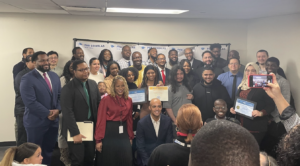
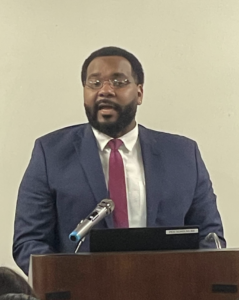 Per Scholas was excited and honored to welcome Daniel West, Vice President of Social Impact at BlackRock as the keynote speaker at our last Per Scholas New York graduation of 2023. The ceremony celebrated 33 graduates of a Cybersecurity cohort co-hosted with our satellite partner, Cypress Hills Local Development Corporation.
BlackRock has partnered with Per Scholas since 2018 to create paths to financial security by providing individuals often excluded from tech careers with skills training and access to high-growth opportunities in the tech sector. This partnership has been pivotal in many Per Scholas initiatives, including our scale to remote training during the Covid pandemic, building and expanding our training capacity and options, the launch of our newest campus in Houston, and more.
In his commencement address, Mr. West celebrated the incredible achievements, determination, hard work, and limitless future potential of each graduate, as well as the foundation that had been set within each of them for a lifetime of continuous learning.
“This is a momentous occasion, not just for each of you individually, but for the communities you come from, and for the transformative power of education in the pursuit of a brighter future,” West said. “Your unique perspectives, informed by the tapestry of your individual stories, will contribute to innovative solutions, and foster more inclusive workplaces…You have the potential to shape the future, not only for yourselves but for those who will follow in your footsteps. Armed with your education and the foundation laid at Per Scholas, I have no doubt that each of you will indeed change the world.”
Per Scholas Featured in Fast Company, Highlighting Our Integration of Google Certifications into Our Skills-Based Training
Per Scholas was featured in an article published with Fast Company, in which Lisa Gevelber, founder of Google’s certificates program, discussed the ways in which skills-based training can open up opportunities.
For years, many tech industry leaders have complained about their inability to find workers with the skills they need. Google’s certificate program has been an excellent solution, offering prospective technologists a rapid, low-cost way to gain the specific skills needed to take on roles within the tech industry.
Google’s career certificate program has now been integrated into the teaching at a number of colleges and school systems, as well as into community-based nonprofits, including Per Scholas, who do cohort based programs and provide coaching along the way for learners earning certificates. Per Scholas has partnered with Google since 2012, and we offer Google IT Support Professional Certificates earn-able through our IT Support training program, which are also available for Per Scholas alumni for up to three years post-graduation.
Read the full article here!
Per Scholas Spotlighted in CIO: Revolutionizing Tech Training, Filling Skills Gaps, and Redefining Diversity in the IT Workforce
Per Scholas Alum and Director of Business Solutions, Wayne Wilson, recently spoke with CIO about how Per Scholas’ rigorous training sets learners up for ultimate success in the technology industry. Our tuition-free model equips learners with important skill sets and professional development training through a fast-tracked program to get them into the job market as soon as possible – all without incurring years of college debt. Having gone through the rigorous enrollment and training process, Per Scholas learners emerge as top tier talent that are armed with both the practical skill sets and professional development needed to thrive in a career in tech.
After training is complete, Per Scholas alumni work closely with our Business Solutions Team, which strives to make meaningful pairings between alumni and hiring businesses. Per Scholas collaborates with partners and other employers to identify job openings that align with training efforts, and connect them with learners who have completed relevant training. Alumni also have access to internal resources that help them find and navigate a new career.
Finally, in our ongoing mission to promote DEIB in the tech industry, Per Scholas works closely with organizations to break down misconceptions and stereotypes around traditional hiring structures, and encourage skills-based hiring.
CIO also interviewed Marie Cari, a first-generation immigrant from Albania and Per Scholas Software Engineering graduate. Marie now works as a Software Engineer at Bank of America, and is grateful for her experience at Per Scholas in helping her expedite the learning process without incurring debt. “I had compared going to Per Scholas to staying in college and going the traditional route,” Marie told CIO. “However, Per Scholas was able to educate me and get me ready for the corporate world in every aspect within months. I didn’t have to go into college debt like my friends did or wait years in order to get the career I wanted,” she reflected.Read more on Wayne’s reflections about our training and Marie’s interview here!
Commonwealth Corporation of Massachusetts Awards Per Scholas Greater Boston a $1 Million Senator Kenneth J. Donnelly Workforce Success Grant to Promote Workforce Equity in Massachusetts
We are excited to announce that Per Scholas Greater Boston has been selected as the recipient of a $1 million grant from the Commonwealth Corporation of Massachusetts! Commonwealth Corporation is a community-based organization that works to promote workforce equity in Massachusetts by “delivering innovative and collaborative professional development solutions that help diverse communities and employers succeed.” Like Per Scholas, Commonwealth Corporation believes that opportunity for meaningful employment can lead to upward mobility for all.
In early November, the Healey-Driscoll Administration of Massachusetts announced nearly $6.4 million in Senator Kenneth J. Donnelly Workforce Success Grants to seven organizations statewide. The grants were funded through the Workforce Competitiveness Trust Fund (WCTF) and distributed by the Commonwealth Corporation, and the aim is to increase access to well-paying jobs for Massachusetts residents facing employment barriers, scale effective career pathway programs, and enhance worker skill and productivity.
Per Scholas was one of 7 Massachusetts-based initiatives selected for their work in “developing and implementing employer-responsive programs to place participants into unsubsidized employment in targeted occupations and create opportunities for underemployed and unemployed individuals to access high-quality, in-demand training programs.”
The grants were presented at Open Sky Community Services, Inc., another grant recipient, in an event that was attended by Per Scholas’ Site Director Tyrone Ramnath and Director of Business Solutions Bernadette Deleon-Rees. The funding will be instrumental in helping Per Scholas expand its reach in the Greater Boston area, covering the resources needed to train even more learners in the coming year.
Read more about the grant awarded here!
IT Certifications vs. Degree: What’s the Difference?
In the dynamic landscape of the tech industry, an ongoing debate surrounds the value of obtaining IT certifications compared to traditional 4-year degrees. Whether you are a prospective technologist launching your IT career or a seasoned professional looking to build on or alter your tech career path, it is important to understand the nuances of each option in order to determine which path best suits your individual needs, goals, interests, and learning style.
In this post, we will explore the pros and cons of obtaining IT certifications through bootcamps and courses versus pursuing the comprehensive education provided by a traditional 4-year degree.
Understanding IT Certifications
To prepare for and land a good, well-paying job, it is a common belief that one must attend college and earn, at minimum, a 4-year Bachelor’s degree. However, in the field of tech, there are many alternative and non-traditional ways to start or advance your tech career with no formal degree.
For those looking to enter into the tech field, specific certifications are necessary to take on most roles. While possessing a traditional 4-year college degree can potentially give applicants a leg up in the job search, certifications are often the main requirement for many roles in tech.
IT certifications serve as industry-recognized credentials,  validating a professional’s expertise in specific areas and skill sets. Preparing for and passing a certification exam ensures that a candidate has obtained an adequate level of experience in the field and verifies a candidate’s ability to problem solve on the spot and apply their knowledge to examples of real-world situations.
Prominent technical certifications include the CompTIA A+ certification, Network+ certification, CompTIA Security+ certification, and more. Each certification caters to a different subset of the IT field, preparing technologists with the skills necessary to directly take on a position in an area that best suits their professional interests.
Benefits of IT Certifications
Specialization and Expertise
One of the wonderful things about working in tech is that the industry is so broad and multifaceted, with an almost endless array of paths to pursue. Rather than a degree, which covers a broad range of knowledge, certifications empower individuals to become highly specialized in niche areas of interest, making them sought-after professionals in their chosen domains. It is not always easy to decide which certifications to obtain, especially when so many options exist, but the wealth of choice allows you to focus on your individual areas of interest and gain the specific skill sets required for positions of your choice.
Certification options range from beginner to highly advanced levels, allowing technologists to not only get started in IT, but also specialize and steer their career paths in the direction of their choice.
They can also serve as stepping-stones towards higher education once you have determined your specific interests and have the resources to pursue a degree, or can supplement, develop, and specialize the skills of those already in possession of a higher-level degree.
Furthermore, as certifications need to be renewed regularly, they verify that your knowledge and skills are up to date in your area of interest.
Cost-Effectiveness
Certification programs are often more cost-effective and time-efficient, enabling quicker entry into the workforce by developing specific, practical skills. Unlike a typical 4-year degree program, certifications can be earned rapidly, or at an individual’s own pace.
As previously mentioned, pursuing certifications allows technologists to rapidly gain the skills needed for specific roles, rather than covering a broad array of knowledge over several years. Bootcamp-style training programs, including Per Scholas, prepare technologists to earn certifications within 12 to 15 weeks through intensive training. They can range from cost-free (like Per Scholas) to several thousand dollars, making them much more affordable than a traditional degree, which can cost tens to hundreds of thousands of dollars.
Technologists can also study for certification exams at their own pace through guided self-study, which is highly cost-effective and can be flexibly catered to fit into a busy schedule.
Industry Recognition
Employers value certifications for their demonstration of hands-on knowledge, providing candidates with a competitive edge and facilitating recognition in the job market. Certifications are not necessarily required for all roles, but obtaining certain certifications indicates to hiring managers that you are proficient with up-to-date knowledge in those areas covered by the certification exam.
Preparing for and earning a technical certification helps translate your training and skills into real-life applications, whichever tech career you choose to take on. Many companies prefer candidates who have certifications, because it validates knowledge of best practices. According to research by the International Data Corporation (IDC), “96% of human resources managers use IT certifications as screening or hiring criteria during recruitment.”
CompTIA is one of the largest issuers of professional certifications in the IT industry, and their array of certifications are recognized industry-wide as confirmation of a candidate’s skills.
Further research by the IDC revealed that once hired,  CompTIA-certified professionals typically perform at a higher level than their non-certified peers over time, and were found to possess higher levels of confidence in their own abilities and greater knowledge bases on a variety of topics. They also proved to be more reliable in their work over time and reached job proficiency more rapidly than their non-certified counterparts.
Limitations of Relying Solely on Certifications
There are, of course, some drawbacks that must also be taken into account when considering whether to pursue IT certifications as your path into tech. For example, one disadvantage of taking the certification route is that certifications require continuous updates in order for the knowledge and skills covered to stay up-to-date and relevant in the ever-evolving tech landscape.
CompTIA A+ certifications are valid for 3 years from the date the exam is passed, after which the certification will need to be renewed – through participating in specific training courses or obtaining new, higher level certifications – or retaken. However, this could also be seen as a potential benefit, as it certifies that your skills are up-to-date.
Another drawback is that, despite the efficacy of certifications, some employers may prioritize candidates with degrees over just certifications, potentially affecting job opportunities. Furthermore, candidates with degrees may earn higher salaries than those with certifications, at least initially. This is changing, and the high demand for technologists means that many employers value candidates with certifications, but there are still cases in which a degree may be prioritized for certain positions within the field.
Finally, earning lower-level certifications that allow you to break into the tech field (rather than more advanced ones used to specialize existing careers) will primarily prepare you to take on entry-level positions, while degrees may allow you to land higher-level positions right off the bat. Although you can certainly work your way to higher positions while starting with a certification, you should be aware that you will most likely be entering the field at closer to entry level.
Delving into Traditional IT Degrees
Traditional IT degrees, such as a Bachelor’s in Computer Science or Information Systems, provide a comprehensive education spanning various aspects of technology. A degree may also help individuals develop a range of skills applicable beyond the IT sector, including leadership, teamwork, problem-solving, critical thinking and communication. These additional skills may give you a further leg up in the job search, as they are attractive to potential employers.
Furthermore, on average, individuals with degrees earn more than those with certifications (at least initially – this gap tends to close over time as technologists with certifications advance their careers), and are more likely to land at higher-level positions when entering the workforce.
As with certifications, there are a number of different IT degrees that you can choose from in order to pursue your specific interests and career goals. According to employment website, Indeed, the most popular tech Bachelor’s degrees are in Information Technology, Information Systems, and Computer Science. These are both broad fields, which typically allow students to take electives that allow them to concentrate in their specific areas of interest.
Bachelor’s degree programs in the following sub-fields are slightly more rare and may also present as elective concentrations within the larger majors of Information Technology, Information Systems, and Computer Science:
- Web Development
- Web Design
- Computer Networking
- System Administration
- Database Management
- Cybersecurity
- Software Development
Master’s Degrees do exist in each of the above-mentioned sub-fields, allowing you to further explore your specific interests. Master’s Degrees can be an excellent way to stand out to employers as they display an advanced knowledge in specialized areas. They can also prepare you to take on more advanced and higher-level roles within the tech field.
Advantages of Holding an IT Degree
Comprehensive Knowledge
Bachelor’s degree programs offer a broad understanding of foundational concepts, shaping well-rounded professionals ready for diverse roles. Furthermore, as many topics are covered, Bachelor’s degree programs may be a great way to determine your specific areas of interest, while Master’s degree programs can help you deepen your knowledge and hone your skills in that chosen area of interest.
Broader Career Opportunities
Possessing a degree opens doors to an array of career opportunities and positions in the tech industry. Some employers place a greater value on applicants who possess degrees, giving those candidates a leg up in the job search and making it easier for them to land more advanced positions right off the bat, and potentially earn higher salaries.
Foundational Skills
Degree programs emphasize the development of strong foundational skills applicable across various technology domains. Unlike certifications, they do not need to be regularly renewed, and can serve as a widely-recognized, lifelong confirmation of knowledge; however, this can also be seen as a detriment as a lack of renewal means skills and knowledge may not be up-to-date with the latest technologies.
Potential Drawbacks of IT Degrees
As with earning certifications, there are a number of drawbacks to earning a 4-year IT degree. Firstly, there is a significant time commitment associated with this path, as the average Bachelor’s degree consists of 4 years of study, and the average Master’s degree lasts at least 2 years. This investment of time delays entry into the workforce and can also be difficult to fit into a daily schedule.
There is also a great financial burden that comes with earning a degree, significantly larger than that of becoming certified. Depending on the institution, Bachelor’s degrees can cost from tens of thousands of dollars to hundreds of thousands of dollars, and Master’s degrees can cost even more. Pursuing a higher education degree is a significant financial investment – one you should be sure of before committing to if cost is a deciding factor.
Another setback is that, in some cases, while degree programs provide a great deal of knowledge, they can contain less focus on hands-on experience and practical job-readiness training, whereas certifications prepare you directly to take on specific, real-world roles.
Finally, many tech roles do not require degrees, and more and more employers are now accepting certifications as an adequate requirement for hiring. There is always the risk that, after investing the time and money into earning a degree, you will be just as qualified in the eyes of employers as those with certifications. It also may be the case that you will appear overqualified for certain positions, potentially making it more difficult to land entry-level jobs after graduation.
Certifications vs Degrees: Which Path is Right for You?
Now armed with insights into the advantages and limitations of both paths, it’s time to make a choice that aligns with your career goals, interests, and resources. There are pros and cons associated with both certifications and degrees, and you should weigh these carefully when determining the best option for yourself.
Certifications can rapidly prepare people to directly take on specific roles in tech, are much more cost effective, and can be chosen and stacked to cater to individual interests and career goals. However, they need to be renewed regularly in order to be officially recognized – unlike degrees, which are good for life – and provide a more narrow and less comprehensive education.
Degrees provide a broad education, may be prioritized by some employers in the hiring process, and may allow you to take on higher-level roles when first starting out in the field. However, degrees can be extremely expensive, take a significant amount of time to complete, may offer less hands-on, job-specific training, and may not be necessary for many roles in the tech workforce.
Consider individual career aspirations and choose a path that best suits goals: certifications may be preferable for quick, cost-effective entry into specialized roles, while degrees offer a broader foundation for diverse career trajectories.
Per Scholas’ Role in Your Journey
Per Scholas plays a crucial role in supporting those who choose to pursue IT certifications. There are many prohibitive factors that can prevent people from pursuing degrees in IT, including cost, time constraints, and unequal access to resources and education.
At Per Scholas, we are committed to helping break down those barriers that may prevent people from entering the tech field by providing training that allows individuals to earn certifications in tech at no individual cost. Certifications can be an excellent launching pad for a rapidly growing number of positions in tech, and can help guide and shape career paths to success.
Our commitment to diversity bridges the tech skills gap and provides opportunities for underserved communities, creating on-ramps and achievable paths to enter the tech workforce for those typically underrepresented in the field.
Conclusion: Carving Your Unique Path in Tech
In conclusion, there’s no one-size-fits-all answer to the certifications vs. degrees debate. It is important to assess your goals, resources, interests, and learning style in order to make an informed decision that carves your unique path in the ever-evolving world of technology.
If you think certifications are right for you, are you ready to take the next step? Sign up for Per Scholas courses and embark on your journey to a successful IT career!
People of Color in Tech: Empowering Diversity
In the ever-changing world of technology, there’s a growing awareness of the importance of diversity, equity, inclusion, and belonging (DEIB) in driving innovation and progress. However, challenges still persist for people of color trying to enter the tech industry. From underrepresentation, barriers to entry, and biases in the workplace, the journey for people of color in tech can be challenging.
However, amidst these challenges, there are opportunities for positive change and growth. This article takes a closer look at the issue, examining the current state of diversity in the tech industry and shining a light on the pivotal role played by organizations like Per Scholas in supporting aspiring technologists.
 Per Scholas is committed to creating a more diverse and inclusive tech workforce by creating opportunities and connections for women and people of color, groups greatly underrepresented in IT employment today. We envision a tech workforce as diverse as the customers it serves and, in order to achieve this, it is important to understand and break down the barriers that deter diverse individuals from entering the tech industry.
Tech Industry at a Glance and Understanding the Current Landscape
Unfortunately, the tech industry faces a significant diversity gap, with statistics showing a notable underrepresentation of people of color within its workforce. Understanding this situation is the first step toward implementing effective solutions.
According to the 2023 Tech Report, approximately 63% of employees in the U.S. technology sector are white, 20% identify as Asian American, 8% as Hispanic or Latino, 7% as Black, and less than 1% as Native Hawaiian, Pacific Islander or Native American.
While there has been a recent emphasis on promoting DEIB within workplaces, especially in the historically white, male-dominated tech field, there’s still much work to be done in order to reduce discrimination, bolster opportunity, and promote DEIB within the workplace.
The reasons behind these disparities are complex and interconnected, rooted in historical and systemic inequalities resulting from discriminatory policies. These inequalities negatively affect people of color in the United States and can limit opportunities for those in communities of color.
Unequal Access to Resources
In the U.S., not everyone has the same opportunities to learn. Persistent systemic inequalities mean that communities of color are more likely to experience poverty, impacting their access to essential resources, including quality education.
Limited educational opportunities, outdated school resources, and understaffed schools hinder the development of necessary skills and knowledge, particularly in STEM fields. Despite incredible potential and talent in communities of color, unequal access to resources and educational opportunities makes it more challenging for people of color to break into certain fields, especially in STEM.
Wage Gap
Despite improvements in education levels among Black Americans in recent decades, a racial wage gap still exists across various industries within the U.S. Studies reveal that employees of color can earn up to 30% less than their white counterparts for the same roles, regardless of performance, education, age, skill level, and gender.
This wage gap is more pronounced in certain industries, including the tech sector, where white employees, on average, earn 6.95% more than Black employees for the same jobs. This difference in pay can be daunting, frustrating, and prohibitive for those looking to break into the tech field.
U.S. Digital Divide
Another factor that influences the tech industry’s diversity gap is the U.S.’s digital divide. The digital divide refers to the unequal access to digital technology, including the internet, that exists in this country.
According to a report by the Pew Research Center, around 1 in 10 Americans (30% of the population) report experiencing problems connecting to or accessing the internet at their homes at least some of the time, while 9% report experiencing this lack of access frequently or all the time.
Due to a number of systemic factors, minority communities, especially in lower-income areas, are more likely than white communities to lack access to high-speed internet and modern computing devices. Statistics from this report show that, while 80% of White adults have access to home broadband, this is true for only 71% of Black adults and 65% of Hispanic adults.
This lack of access limits the ability of people in affected communities to gain digital skills and participate in online learning, certifications, and tech-related activities – all of which are important to launching careers in tech.
Workplace Culture
While increasing opportunities for people of color in the tech industry is crucial, there must be an equal focus on creating an inclusive culture within tech workplaces where employees feel both valued and empowered. Despite recent national attention on DEIB in the workplace, the tech industry still has progress to make in terms of inclusivity.
A 2022 Dice report found that 24% of tech professionals report experiencing direct racial discrimination in the workplace within the last year, and 53% of Black tech professionals say they think racial inequality occurs either very frequently or frequently – higher than the percent reported in any other group.
Some tech companies also lack inclusive policies and practices, making it difficult for employees from diverse backgrounds to succeed. Discrimination and bias in the hiring process can also lead to underrepresentation of minorities in tech companies. Thus, inclusive policies, such as diverse hiring panels and unbiased performance evaluations, are essential for creating a more inclusive workplace.
Lack of Mentors and Role Models
Finally, the perception of the tech industry as predominantly white and male, although based in fact, creates a self-perpetuating cycle. People of color may feel discouraged from pursuing tech careers because of the existing lack of representation.
The lack of diversity means that minority technologists have far fewer mentors and role models from similar racial backgrounds. Without guidance and inspiration, people may struggle to envision themselves succeeding in the tech industry.
Addressing the lack of diversity in the U.S. tech industry requires a comprehensive approach. Critical steps include promoting equal access to education, bridging the digital divide, implementing inclusive hiring practices, and cultivating supportive work environments.
Challenging societal stereotypes and biases is essential for breaking down barriers, enabling talented technologists from all backgrounds to enter and thrive in the tech field.
Per Scholas’ Commitment to Diversity
Per Scholas is determined to make the tech world more accessible for everyone, especially those facing challenges and barriers to entry. We picture a tech workforce that reflects the diversity of the people it serves. Recognizing that diverse talent is everywhere but opportunity is not, we believe a successful workforce begins with fair access to education. That’s why we offer top-notch, accessible, and cost-free tech education to those typically underrepresented in the tech industry.
Since 2016, Per Scholas’ Diverse by Design initiative has been partnering with employers to have practical conversations about DEIB in tech. Starting as a discussion series, Per Scholas Diverse by Design aims to serve as a space for tech leaders and workforce developers to share best practices and ideas for attracting, retaining, and developing skilled professionals from diverse communities. Events under this initiative bring together hundreds of participants across the country, guided by a National Advisory Board with members from various tech-related organizations.
 Through focused discussions and advice from DEIB experts, Per Scholas Diverse by Design helps C-suite leaders make valuable and socially impactful business decisions. The initiative also offers organizations tailored training tracks and talent sourcing solutions, allowing them to meet their own talent demands while simultaneously transforming the diversity landscape within their company.
At Per Scholas, we are proud that 85% of our learners identify as people of color. Our specialized courses, like the Per Scholas Columbus Tech Women of Color (TWOC) Tech Fundamentals course, aim to boost diversity in tech. Open to women of color, this course was designed with the goal of understanding how to overcome the barriers women and people of color face when entering the tech industry, and to help unlock the potential of female and POC learners.
Last year, Per Scholas partnered with executive advancement company Guerrero Media to create The Code Breakers: Women in Tech campaign. Each week, this campaign highlights exemplary women who have built successful careers working in tech, breaking down barriers and inspiring other minority technologists to pursue paths in tech. Per Scholas also works closely with local workforce development programs, such as Goodwill and Year Up, to recruit talented, diverse individuals, and launch them on paths to success in the tech industry.
Success Stories: People of Color Thriving in Tech with Per Scholas
As mentioned above, a crucial step in bringing more diversity to the tech field, beyond simply preparing learners with the skills to launch their careers, is showing people from various minority-in-tech backgrounds that success is possible for them in the tech field. In a 2021 study, the Pew Research Center found that over half of Hispanic Americans they surveyed felt that young Hispanic people would be a lot more likely to pursue a STEM degree if they saw examples of high achievers in the field who were Hispanic.
Carla Davis, a Black woman and recent graduate of Per  Scholas’ AWS re/Start course, shared her thoughts on being a woman of color in the field – the smallest minority represented in tech. “I saw that a lot of minorities are not in tech and we didn’t have the guidance or the mentoring, so we kind of opt-out and don’t think of it as a field that we’re used to seeing,” Carla reflected. “Hopefully, I can be some kind of example for others, but it was extremely difficult to get my foot in the door. The instructors and courses at Per Scholas showed me that if I worked hard, it is possible to get the certifications and get the jobs…Even if you don’t have the same starting place, you can learn it.”
Joseph Diaz, a Black and Hispanic graduate of Per Scholas New York’s Network Support course who now works as a Team Lead in Quality Assurance and DevOps at Barclays, had never reflected much on his race before starting his career in tech. After growing up in a highly diverse Bronx neighborhood, he was surprised to find himself as one of the only Hispanic technologists in a number of the tech industry roles he took on. “[At my job], it’s kind of interesting to be the only Diaz on the mailing roster,” Joseph said. “I don’t see a lot of similar last names or people who I think are Hispanic around me. But I feel like if I give that meaning to my name, imagine what other people could do for themselves. Other people in my neighborhood who are of Black or Hispanic origins ask about my career; it kind of gives them a direction. [They say] ‘hey, I want to do that too because you’re doing it.’ It pushes that boundary.”
Taking the Leap with Per Scholas: Steps to Empower People of Color in Tech
Per Scholas is committed to creating a tech workforce as diverse as the communities it serves. We acknowledge that there’s still much work to be done in order to reduce discrimination, boost opportunities, and promote DEIB in the tech industry.
The promotion of DEIB in the tech workplace begins with opportunity and intentionality. By understanding the barriers that keep people of color from entering the tech field, we can begin to break them down.
While the IT field still has a long way to go to become totally  diverse and inclusive, Per Scholas is dedicated to driving this change. We aim to transform the technology landscape by opening pathways of opportunity for diverse talent and helping other organizations do the same.
Empowerment starts with education and opportunity. Together, we can build a future where everyone, regardless of their background, can thrive in the world of technology.
Apply now to Per Scholas and be a part of the change.
Per Scholas Participates in JPMorgan Chase Panel: “The Opportunity to Expand Apprenticeships – A Field + Funder Conversation”
Earlier in November, Per Scholas received a $1 million grant from JPMorgan Chase to help expand apprenticeship opportunities for learners and scale programs for in-demand occupations ahead of National Apprenticeship Week.
We are one of four organizations to receive the philanthropic commitment totaling $3.5 million, and as a recipient, Per Scholas participated in a virtual panel discussion, “The Opportunity to Expand Apprenticeships – A Field + Funder Conversation,” on Thursday, November 16.
Per Scholas Chief of Staff Tamara Johnson joined Workforce Matters, JPMorgan Chase, Apprenticeships for America, and partners from Apprenti and New America for the event. The panelists discussed the policies and systems important to supporting the learn and earn ecosystem; promising practices that advance equitable access to and outcomes from apprenticeship programs; and how funder investments might help further expand apprenticeship opportunities.