
Per Scholas Columbus Featured on Out N About Columbus
Per Scholas Columbus was featured on a recent Out N About Columbus segment on Sunday, August 20. The show focuses on events, entertainment, and travel around Columbus, and often has segments dedicated to important happenings around town.
On the segment, “Learn Something New,” hosts Mike Killburn and Renee Joseph discussed different topics, including Per Scholas Columbus’s technology training. Per Scholas Columbus Managing Director Jenn Fowler Howard underscored the importance of tech training in Columbus and the power of our learners. In her interview, highlighted the ways Per SCholas eliminates barriers, helping unlock potential for learners and alumni to launch thriving careers. Watch the full feature here, starting at timestamp 9:23!
Per Scholas St. Louis Celebrates IT Support Graduation with 21 Technologists
On August 18th, Per Scholas St. Louis celebrated its largest graduation yet as 21 learners graduated from the most recent IT Support course. The cohort was incredibly diverse, ranging in age from 19 to 50 years old, included 11 men and 10 women, several of whom were parents. The graduating technologists originated from a variety of professional backgrounds, including retail, warehouse work, and finance, but all are now fully prepped to launch high-growth careers in tech.
Hosted by Deputy Chief Training Officer Noah Mitchell, graduates in attendance heard from our community partner, Tydrell Stevens, Regional Director of Save Our Sons, Urban League of Metropolitan St. Louis, who congratulated the new graduates and spoke about our organizations’ joint missions.
Attendees also heard from the selected class speaker, Kristina Henderson, before receiving their certificates, officially graduating from the IT Support program. Next followed the presentation of the Core Value Honors. At every graduation, honors are bestowed to graduates who exemplify our core values of Ambition, Integrity, Professionalism, Resourcefulness, Perseverance, and Commitment to Service. The awards for the graduating St. Louis IT Support cohort were as follows:
- Ambition – Allen Morgan
- Integrity – Srilatha Ramakrishna
- Professionalism – Isaiah Word
- Resourcefulness – Brian Green II
- Perseverance – Myiesha McCray
- Commitment to Service – Karen Taylor
The Keynote Address was presented by Sam Fiorello, President & CEO of Cortex Innovation Community. Cortex Innovation Community graciously welcomed Per Scholas St. Louis as it technical skills trainer of choice to ensure a more equitable and inclusive St. Louis.
Finally, the event featured a special message from Per Scholas President and CEO Plinio Ayala. Plinio congratulated the graduates on their incredible accomplishment, encouraging Per Scholas alumni to always continue learning and growing, and wished them luck as they embarked on their newfound careers in the tech industry. Watch Plinio’s video message here.
Learn more about upcoming training opportunities at Per Scholas St. Louis and apply by visiting https://perscholas.org/locations/st-louis/.
Per Scholas Greater Boston Technologists Thriving with MassTLC Member Companies
Earlier in August, MassTLC featured Per Scholas Greater Boston in an article for their member companies, Investing in Success: The Power of Hiring Per Scholas Alumni. The article showcased two Per Scholas Greater Boston technologists that have launched their tech careers with MassTLC member companies.
Fabio Benoit, a Technical Support Analyst within the Analytics Department at Bullhorn Inc. graduated from the Software Engineering Full Stack Developer cohort in March 2022. Hiba Abbaker, who graduated from the AWS re/Start training in January 2021 and is now working at Slalom_Build as a Platform Engineer, was also featured in the article.
Fabio and Hiba are two of the more than 600 Per Scholas Greater Boston graduates that have started their careers in tech from trainings including Software Engineering, AWS re/Start, IT Support, Cybersecurity, and more. In collaboration with partners including MassTLC and their member companies, Per Scholas technologists are launching their careers in tech, and unlocking potential for themselves, their companies, and the Greater Boston community.
Per Scholas North Carolina Continues to Empower Learners Through Innovative Partnership with Truist Foundation
As part of Per Scholas’ mission to promote equitable access to education, Per Scholas North Carolina has partnered with Truist Foundation, an organization committed to building career pathways to economic mobility and strengthening small businesses. The partnership will allow us to expand our training to rural communities across North Carolina. This month, Truist Foundation awarded Per Scholas with a $1 million grant, and our organizations held a joint event focused on professional development.
Truist Foundation Grant Reception
On August 10th, Truist Foundation announced that it would be committing $2 million to promote economic mobility through technology-oriented training initiatives in communities across North Carolina. Per Scholas received $1 million from this initiative, with the other $1 million going to tech training nonprofit NPower.
This generous grant will be used to double the size of Per Scholas North Carolina’s existing training program, allowing us to increase access and opportunity for high-growth careers in tech to learners across North Carolina. Per Scholas will be growing its partnership with Wilkes Community College to provide tech skills, professional development, and coaching to learners in Western North Carolina, outside of Charlotte city limits, and offer remote training programs to learners in rural areas of the state.
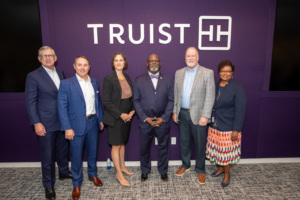
Per Scholas Chief Development Officer Caitlyn Brazill attended the remarkable event. Also in attendance were Heath Campbell –Regional President of Metrolina, Truist Financial Corporation; Bill Rogers – Chairman and CEO, Truist Financial Corporation; Erskine Bowles – Co-Founder, Housing Impact Fund; George Dunlap – Chairman of the Board, Mecklenburg County Commission; Keitt King – Head of Truist Community Capital; and Bertina Ceccarelli – CEO, NPower.
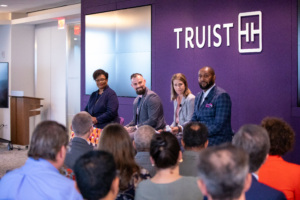
Lynette Bell – President, Truist Foundation, moderated a panel with Mike Terrell – Managing Director, Per Scholas North Carolina; Adelaide Martin – Operations & Impact Manager, Ascent Housing; and Ray Trapp – Executive Director, NPower North Carolina.
“Per Scholas is grateful for this tremendous investment into Per Scholas North Carolina from Charlotte-based Truist Foundation, helping to increase pathways to economic mobility for North Carolinians,” said Mike Terrell, managing director of Per Scholas North Carolina. “We know the transformative impact a career in technology can have on individuals, and increasing access and opportunity is key…We’re very humbled by Truist Foundation’s grant, which will help us unlock potential for even more aspiring rural technologists, in turn building stronger communities, companies, and economies.”
Per Scholas North Carolina Truist Volunteer Event
Per Scholas North Carolina and Truist Foundation held a joint event on August 10th, in which volunteers from Truist paired with Per Scholas North Carolina technologists, providing our technologists with the opportunity to learn from industry professionals and practice their growing professional development skills.
20% of Per Scholas’ training curriculum centers on professional development and coaching, with emphasis on the essential skills of problem solving, collaboration, innovation, and leadership. Opportunities like these in which future tech professionals can meet and learn from established industry experts are priceless in fostering these skills and are a great way for technologists to begin building their professional networks.
After the paired coaching sessions, Per Scholas North Carolina’s Manager of Strategic Partnerships Desiree Patterson led participants in a Talk Back session, in which everyone discussed what they had learned and reflected on how they would use what they had learned to grow going forward.
The event, which was hosted by Per Scholas North Carolina Campus Director Dr. Jastacia Jones, also included remarks from Truist’s Chief Financial Officer, Mike Maguire, who delivered the announcement of Truist’s $1 million grant to Per Scholas, and from Per Scholas North Carolina Managing Director Mike Terrell, who expressed Per Scholas’ sincere gratitude to Truist in supporting our joint mission, and thanked the participants of the event.
Read more about Truist Foundation’s $1 million grant to Per Scholas here and here.
Per Scholas Chief Training Officer Jasmine Miller Pens Op-Ed for Atlanta Journal-Constitution
August 26th marked Women’s Equality Day, and Jasmine Miller’s Opinion piece, “Tech Fields Need More of a Woman’s Touch,” focuses on the need for women’s insight and experience in tech.
Jasmine Miller mentions from her perspective, “Just as diverse teams fuel innovation, better manage risk and create products that cater to a broader audience, so too does diversity drive better results, decisions and products when it comes to technology. Women bring a unique set of experiences, insights and solutions. In a world increasingly driven by technology, omitting women’s perspectives is not just a question of equity but of missed potential.”
Damien Howard Shares His Insights for IT Leaders in His Debut Forbes Business Council Membership Article
Per Schoals Chief Enterprise Solutions Officer Damien Howard wrote his first piece for Forbes Councils, an invitation-only, professional organization where top CEOs and entrepreneurs are supported through connections, visibility, and growth.
Damien highlights the recent shift in job trends. Employers are no longer looking for a 4-year degree to be qualified for a position. Now, alternatives such as a completion certificate from an evidence-based, proven skills-based training firm; an associate degree; military service; or on-the-job experience are becoming more acceptable – ultimately leading to a stronger economy and more successful businesses. Damien describes how America’s employers are key agents of change and suggests 3 ways that businesses can shift their approach and gain diverse talent.
Read about his three tips here!
NPower and Per Scholas Each Receive $1M Grants from Truist Foundation to Support Tech Training across North Carolina
NPower and Per Scholas Each Receive $1M Grants from Truist Foundation to Support Tech Training Across North Carolina
Grants will help expand access to careers in technology, boost
economic mobility for underserved adult learners
CHARLOTTE, N.C., Aug. 10, 2023 – In an era where technology and digital prowess have become essential for many job opportunities, Truist Foundation today announced $2 million in commitments to support a singular focus: forging pathways to economic mobility through technology-oriented training initiatives in communities across North Carolina. A $1 million grant will go to national tech training nonprofit NPower and a separate $1 million grant will go to Per Scholas, a national nonprofit that aims to advance economic equity through training for tech careers.
“North Carolina has long been a thriving tech hub, but not everyone has access to the opportunities it offers,” said Lynette Bell, president of Truist Foundation. “Truist Foundation wants to make careers in tech accessible to everyone across the state, and by offering coursework and career opportunities in more communities, NPower and Per Scholas are helping to break down those barriers to entry.”
Per Scholas will use its funding to double the size of its technology skills training program offering in the Tarheel state. Through dynamic partnerships, Per Scholas North Carolina will offer remote training programs to more than 250 learners in rural areas of the state in an effort to increase access and opportunity for high-growth careers in technology.
As it expands, the organization will grow its powerful partnership with Wilkes Community College to provide tech skills, professional development and coaching to learners in Western North Carolina, outside of Charlotte city limits. With a robust roster of employer partners, from Fortune 500 companies to innovative startups, some previous Per Scholas North Carolina graduates were able to double their pretraining wages in their first tech job, which can result in sustainable economic mobility.
“Per Scholas is grateful for this tremendous investment into Per Scholas North Carolina from Charlotte-based Truist Foundation, helping to increase pathways to economic mobility for North Carolinians. We know the transformative impact a career in technology can have on individuals, and increasing access and opportunity is key. Per Scholas North Carolina has seen the impact of our rural training model already, injecting more than $1.9 million back into local communities,” said Mike Terrell, managing director of Per Scholas North Carolina. “We’re very humbled by Truist Foundation’s grant, which will help us unlock potential for even more aspiring rural technologists, in turn building stronger communities, companies and economies.”
Using the grant funds, NPower will expand its free flagship Tech Fundamentals training program into North Carolina for the first time with a location in Raleigh—a vibrant city within the Research Triangle community. The 16-week training program addresses barriers that exist among young adults ages 18 to 26, military-connected individuals and women of color eager to enter the field of technology.
The ambitious expansion seeks to attract, educate and empower at least 150 new learners over the course of the grant, and aims to hone their skills to master the art of information technology (IT) with the expectation of acquiring expertise equivalent to professionals with one to two years of experience. One of the goals of this initiative is for the impact to extend beyond the boundaries of learning, enabling these graduates to confidently embrace the digital economy and its myriad possibilities.
“Real innovation begins when the problem statement is clear and there is a sincere commitment to address it. That’s why we’re thrilled to be partnering with Truist Foundation for our expansion into North Carolina,” said Bertina Ceccarelli, CEO of NPower. “Empowering underserved communities through innovation in tech and embracing diversity isn’t just a vision; it’s the driving force behind NPower’s mission, where every challenge becomes an opportunity to pave the way for a brighter, more inclusive tomorrow.”
During an event at Truist Center in Charlotte, Truist Financial Chairman and CEO Bill Rogers joined Bell, Ceccarelli and Caitlyn Brazill, chief development officer of Per Scholas, to formally announce the grants and discuss their impact across North Carolina. Terrell and NPower Executive Director Ray Trapp also participated in a panel moderated by Bell to discuss the importance of progressing economic mobility in North Carolina.
North Carolina is known as a tech hub in the U.S. In 2021, commercial real estate leader CBRE ranked Raleigh-Durham and Charlotte among the top tech talent markets in the U.S. and Canada. According to their findings, Charlotte proved to have one of the most diverse tech talent workforces in the U.S. and ranks among the top 10 states in the nation for total employment in this sector.
# # #
About NPower
NPower is a national nonprofit on a mission to move people from poverty to the middle class by training youth from underserved communities and military-connected individuals in a range of tech skills and placing them in quality jobs. Students who enter their free, six-month program, earn industry-recognized certifications and graduate with the competencies of an IT professional with one to two years of experience. NPower also places students in paid internships with corporate and nonprofit organizations. Eighty percent of NPower graduates get a full-time job or continue their education. Not only is NPower changing life trajectories for individuals from vulnerable communities, but they are also strengthening the overall competitiveness of U.S. businesses hamstrung by today’s limited pool of IT talent. To learn more about NPower, visit www.npower.org.
About Per Scholas
For more than 25 years, Per Scholas has been advancing equity and increasing opportunity across America. Per Scholas unlocks potential for individuals, communities, and employers through rigorous training for careers in tech. Partnering with dynamic employer partners, from Fortune 500 companies to innovative startups, we are building sustainable and diverse talent pipelines, together changing the face of tech. With national remote training and campuses in 20 cities and growing, Per Scholas offers tuition-free training in the most in-demand tech skills, including Cloud, Cybersecurity, Data Engineering, IT Support, Software Engineering, and more. To date, more than 20,000 individuals have gained the skills to launch high-growth tech careers, earning three times their pre-training wage. Diversity, equity, inclusion, and belonging is our DNA, with 85 percent of learners are people of color, two in five are women, and more than half have a high school diploma as their highest education credential. Learn more by visiting PerScholas.org and follow us on LinkedIn, Twitter, Facebook, Instagram, and YouTube. For local updates, follow Per Scholas North Carolina on LinkedIn and Facebook.
About Truist Foundation
Truist Foundation is committed to Truist Financial Corporation’s (NYSE: TFC) purpose to inspire and build better lives and communities. Established in 2020, the foundation makes strategic investments in nonprofit organizations to help ensure the communities it serves have more opportunities for a better quality of life. Truist Foundation grants and activities focus on building career pathways to economic mobility and strengthening small businesses. Learn more at Truist.com/Foundation.
# # #
Truist Invests $17 Million in the Future of Charlotte and Communities Across North Carolina
Truist Financial Corporation (NYSE: TFC) and Truist Foundation today announced $17 million in commitments to support affordable housing in Charlotte and career development and economic mobility programs across North Carolina.
The Truist commitment consists of three initiatives:
- $15 million equity investment from Truist Community Capital in the Housing Impact Fund II to combat displacement, secure affordable housing and facilitate critical services for low-to-moderate income families across Mecklenburg County. It is the second such fund formed by Erskine Bowles, former head of the U.S. Small Business Administration and White House Chief of Staff under President Clinton, and Nelson Schwab, a founding partner of Carousel Capital.
- $1 million Truist Foundation grant to Per Scholas North Carolina to expand technology skills training in rural North Carolina.
- $1 million Truist Foundation grant to NPower to provide technology skills and employment opportunities for military-connected individuals and underserved young adults in the Raleigh community.
Read the Truist press release here.
Advancing Hispanic and Latinx Presence in Tech
THE STATE OF DIVERSITY & INCLUSION IN TECH
Although there have been advancements over the years in the diversity of the tech field, the broad field of technology is still heavily dominated by white men, and now is a good time to celebrate the many accomplishments of our Hispanic and Latinx co-workers and learners while reflecting on the state of diversity in tech. Black, female, Latino/a, and other minorities remain greatly underrepresented throughout the tech industry.
In recent years, more emphasis has been put nationally on the importance of promoting diversity, equity, inclusion, and belonging (DEIB) in the workplace, but the tech industry still has a long way to go in becoming a more equitable workforce.
- For example, in 2014, Google, a subsidiary of one of the world’s largest tech companies, reported that only 2.9% of their employees were Latino/a.
- Google promised to commit over $150 million to increasing diversity at their company but, by 2020, just 5.9% of their workforce identified as Latino/a, a definite improvement, but nowhere near representative of the U.S. population.
- According to a 2021 analysis of federal government data by the Pew Research Center, Hispanic workers make up 17% of total employment across all occupations, but make up just 8% of tech workers.

WHY DIVERSITY, EQUITY, AND INCLUSION MATTERS
Currently, there are a myriad of barriers for minority individuals looking to enter the tech workforce. In addition to the bias and discrimination towards certain minorities that still, unfortunately, exist in a disproportionately high amount in the STEM fields, lack of access to opportunity and specified support within the tech field, our country’s digital divide, racial wage gaps, poverty, systemic inequalities, and even disparities in reliable internet access, are all barriers to entry for potentially talented individuals seeking to become involved in tech.
Creating pathways for more diverse talent to get involved in tech is the first step in building a diverse workforce. While tech training programs and bootcamps can help alleviate some barriers into the tech field by costing less and being quicker than the typical four-year degree, many are still prohibitively expensive and do not adequately target underrepresented groups for recruitment.
CELEBRATING HISPANIC HERITAGE
Each year, Per Scholas observes National Hispanic Heritage Month, from September 15th to October 15th, to celebrate the histories, cultures, and contributions of those and their ancestors who come from Spain, Mexico, the Caribbean, and Central and South America. A fun fact: 27% of Per Scholas’ staff and 14% of our learners identify as Hispanic/Latino!
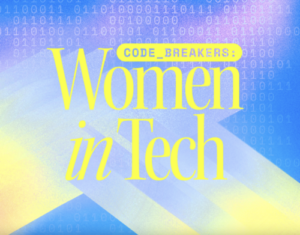 An important step in bringing more diversity to the tech field, beyond simply preparing learners to launch their careers, is showing people from various minority-in-tech backgrounds that success is possible for them in the tech field. In a 2021 study, the Pew Research Center found that over half of Hispanic Americans they surveyed felt that young Hispanic people would be a lot more likely to pursue a STEM degree if they saw examples of high achievers in the field who were Hispanic or Latinx. Earlier this year, Per Scholas partnered with executive advancement company Guerrero Media to create The Code Breakers: Women in Tech campaign. Each week, this campaign spotlights exemplary women who have built successful careers working in tech, breaking down barriers and paving the way for other minority technologists to pursue paths in tech.
 One of our learners who was featured in this campaign is Sara Peña, a Latina woman from Boston who was working as a musician before making the bold decision to switch to a career in tech. Like many people, Sara found herself in a financial crisis during the Covid pandemic when she was laid off from her job. With no income and an insurmountable amount of student loans, Sara had to pivot to a more stable career. A friend mentioned she should look into coding, something Sara had once noted in passing as an interest, so she began researching different boot camps. Sara found Per Scholas through an online search and was intrigued by our mission and course offerings. She applied and was soon accepted into our Software Engineering course at Per Scholas Boston.
Although the course was tough, Sara’s perseverance and dedication helped her through, and she thrived in the program. “It is no secret how daunting it is to…start anew in a career you never thought yourself capable of,” Sara reflected. “In moments where I thought this is too much, too hard, too overwhelming, I remembered in my heart of hearts, this is what I wanted to do and this opportunity was given to me. It was something that I didn’t want to put to waste.” Shortly after graduating, Sara started her new career as a Software Developer at engineering company nou Systems, where she has been continuing to learn. She is working toward earning further certifications and exploring all that the tech field has to offer.
- While women comprise 28.8% of the U.S. tech workforce, Latina women hold only 2% of jobs in STEM.
Spreading stories like Sara’s can help encourage other Latinos and minority individuals that success is possible for them in the tech field. Per Scholas learners of various ages, gender identities, races, ethnicities, physical abilities, and backgrounds have been able to launch thriving tech careers following Per Scholas’ courses. No one should be barred from pursuing a career in tech due to a lack of connection, and the success of our learners serves to encourage others to apply, breaking down barriers to entry in tech.
THE FUTURE OF THE TECH INDUSTRY
At Per Scholas, we are expanding in the future to different cities and doing our research to make sure there is a market that has plenty of job openings and diverse demographics to fill those openings with our skilled graduates. As we continue to train diverse individuals and diversify the tech workforce, we have to consider what the face of tech will look like in the future and how we get there.
With a more diverse workforce that includes the Hispanic and Latinx culture and history, more ideas and insight are at the helm of advancements. It has been reported that organizations ranking high in internal ethnic, gender, age, and cultural diversity regularly perform significantly higher than their industry peers in terms of financial returns and employee satisfaction. Both the business and social cases for diversity are strong. It is now up to individual companies to put in the work to improve the diversity of their workforces, and Per Scholas is happy to help facilitate the process.
The promotion of DEIB in the tech workplace begins with opportunity and intentionality. The IT field has a long way to go in order to become a totally diverse and inclusive community, but it is headed in the right direction. Per Scholas is committed to helping drive this change, transforming the face of technology by opening pathways of opportunity for diverse talent, showing minority-in-tech individuals that success is possible for them in the IT field, and helping other organizations create more inclusive, intentional, and equitable workforces.
We are committed to breaking down the barriers that keep people from entering the tech industry and our cost-free, high-quality tech training seeks to further open the pathway into tech for those who would otherwise not have had the opportunity.
Per Scholas Diverse by Design Hosts Unlocking Potential Summer Concert and Spoken Word Celebration
On July 20, Per Scholas Diverse by Design hosted our first-ever Unlocking Potential Summer Concert and Spoken Word Celebration. This hybrid event, produced live from Per Scholas New York and Per Scholas North Carolina and streamed at PerScholas.org/Concert, brought together Per Scholas staff, learners, alumni, partners, advisory board members, and more to rally around our mission to unlocking potential.

This inspiring event featured talented musicians and poets who work, learn, and partner with Per Scholas, including:
- Deji Adefuye, Per Scholas Dallas Teaching Fellow, who premiered two original songs titled Persevere and You Believe In You
- Melodie Rodgers, Per Scholas Manager of Career Advancement, sharing her original poem, Unlock Your Potential
- Zaidi Howard, Per Scholas Chicago Teaching Fellow, sharing his original poem, Soul Questions
- Caprice Green, Per Scholas Detroit Alumna, performing Astonishing from Little Women
- Mike Terrell, Per Scholas North Carolina Managing Director, performing Tears for Fears’ Everybody Wants to Rule the World
- Omoanatse McCarther, Per Scholas Diverse by Design Senior Director, sharing her original poem, Forged Key
- Broadway Star Tim Connell, performing Corner of the Sky from Pippin
- Nonprofit Consultant and Leadership Coach Saundra Thomas, performing her original poem, Silver Linings
Hosted by Executive Vice President for Diversity, Equity, Inclusion, Belonging, and Culture Ken Walker, viewers had the opportunity to hear from our EVP of People Montreece Smith, Regional Senior Vice Presidents Noah Mitchell, Jaclyn Boyes, and Robin Nadeau, as well as President and CEO Plinio Ayala. Chief Development Officer Caitlyn Brazill delivered remarks live from the Bronx and introduced the final performances.
Scores of Per Scholians came together for this exciting event; many thanks to Per Scholas Columbus, Per Scholas Dallas, Per Scholas New York Bronx, and Per Scholas North Carolina for hosting on-campus viewing parties.
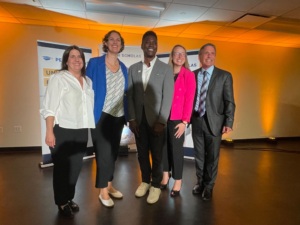
In closing, the event showcased just a handful of our brilliant Per Scholas alumni, which you can watch here. If you missed the Unlocking Potential Summer Concert and Spoken Word Celebration, you can watch the recording here! If you feel inspired and want to help unlock potential, please give at perscholas.org/donate.