
Per Scholas Los Angeles Celebrates Grand Opening and First In-Person Cohort Graduation, Expanding Access to High-Growth Tech Careers
Los Angeles, C.A., March 13, 2025 — Since launching in March 2023, the Per Scholas Los Angeles campus has trained over 300 learners, equipping them with critical tech skills such as IT Support, Cybersecurity, and Software Engineering.
Today, alongside community and employer partners, colleagues, learners, and friends, Per Scholas Los Angeles hosted a grand opening celebration featuring the graduation ceremony of its first in-person cohort, followed by a ribbon-cutting dedication with remarks from the Los Angeles Area Chamber of Commerce and the City of Los Angeles Economic & Workforce Development Department, and an open house reception.
“Technology is ever-evolving, and so too must we. This grand opening isn’t just about a new space; it’s about opening doors to new possibilities, new skills, and new futures for those who seek to thrive in the digital age,” said Patrice Madu, Per Scholas Los Angeles Managing Director.
Per Scholas Los Angeles acknowledges the generous support of Focusing Philanthropy, The Eli and Edythe Broad Foundation, the Foundation for California Community Colleges, The James Irvine Foundation, J.P. Morgan Chase & Co., Comcast NBCUniversal, Joseph Drown Foundation, Michael J. Connell Foundation, Microsoft, Amazon, the City of Los Angeles Economic & Workforce Development Department, and Match Group.
With a proven model that includes both in-person and remote learning hubs, Per Scholas continues to unlock opportunities for individuals, strengthen communities, and drive business success across the state. Notably, every dollar invested in Per Scholas yields an $8 net economic return. Per Scholas Los Angeles is transforming lives and shaping Los Angeles’s future as a thriving technology hub by equipping Per Scholas Technologists with in-demand tech skills at no cost.
To learn more about Per Scholas Los Angeles, follow them on LinkedIn or visit their page.
About Per Scholas
Per Scholas is proud to celebrate 30 years of fostering economic mobility by giving individuals from diverse backgrounds access to high-growth tech careers. Since 1995, we’ve offered no-cost tech training to more than 30,000 technologists in the most sought-after tech skills, generating over $2 billion in increased personal earnings. By 2030, we aim to train and upskill 25,000 technologists annually—building on three decades of impact. With 20+ campuses and remote programs, we partner with employers—from Fortune 500 companies to startups—to create inclusive talent pipelines in fields like Cloud, Cybersecurity, Data Engineering, IT Support, and Software Engineering. 85%+ of our learners are people of color, 40% are women, and more than half hold a high school diploma as their highest educational credential. We are building a future where successful careers in tech are accessible to everyone, driving transformative economic change.
Learn more at PerScholas.org and follow us on Facebook, Instagram, LinkedIn, X, and YouTube.
###
Per Scholas Buffalo Alumni Taranja Lewis and Anthony Khanthavout Interviewed by The Buffalo News
Taranja Lewis and Anthony Khanthavout, alumni of Per Scholas Buffalo’s inaugural cohort, were interviewed by The Buffalo News earlier this month about their experience at Per Scholas. “Everything really, truly was in alignment for me to be here today,” said Lewis, who’s interest in Per Scholas was initially piqued by positive and commendatory comments about Per Scholas Buffalo’s Managing Director, Jeremy Besch, which Lewis found online. From there, Lewis looked into Per Scholas and was intrigued by all that the program had to offer at no cost to learners. Khanthavout, Per Scholas Buffalo’s First Valedictorian, discussed his success in the program, encouraged by his instructors.
Per Scholas Buffalo’s inaugural cohort was an IT Support course, offering the opportunity for learners to earn the Google IT Support Professional Certificate and the CompTIA A+ certification, and equips them with the knowledge to fill a wide range of entry-level technology jobs.
Watch the full interview here.
Per Scholas Houston Hosts Panel Event, TECHnique: The Unique Perspectives of Leaders in the Tech Ecosystem
Per Scholas Houston proudly collaborated with Ion Houston to bring together industry leaders from J.P. Morgan, Microsoft, the U.S. Chamber of Commerce, and our President & CEO for the event, TECHnique: The Unique Perspectives of Leaders in the Tech Ecosystem.
This event offered a unique opportunity to explore the perspectives shaping today’s tech workforce. Panelists discussed challenges and opportunities in technology development, industry needs, tech training opportunities available within the Houston community, and valuable insights into how these organizations collaborate to strengthen the tech ecosystem.
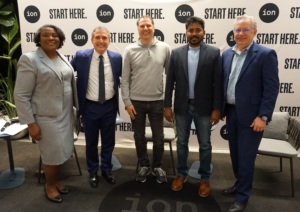
Panelists included Plinio Ayala, Peter Beard, Rob Schapiro, and Karthigeyan Kuppan. Their expertise and the insights they shared tackled key challenges and opportunities shaping today’s tech workforce.
Per Scholas North Carolina Featured on “Positively Charlotte”
Per Scholas North Carolina was featured on a news segment on “Positively Charlotte.” Per Scholas North Carolina Managing Director Michael Terrell joined alum Shana Franks on the program to discuss our no-cost training and recent $1 million grant from The BlackRock Foundation.
Watch the full segment here.
Per Scholas Featured in The New York Times: Preparing Tech Talent for an AI-Driven Future
Per Scholas is honored to be featured in The New York Times article by Steve Lohr, which explores how artificial intelligence is reshaping the software engineering field and the role of workforce development programs in preparing talent for the future.
The article highlights how Per Scholas, through its no-cost technology training programs, is equipping individuals with in-demand skills needed to thrive in today’s rapidly evolving tech industry. As AI changes the nature of coding and software development, Per Scholas’s training ensures that aspiring technologists have the foundational knowledge and adaptability to succeed.
A key highlight of the article is the success story of Ismail FoFana, a Per Scholas graduate who leveraged the training and career support offered by the program to break into the tech industry. His journey is a testament to the power of high-quality, accessible education in creating life-changing opportunities and addressing the talent gap in the sector.
Per Scholas remains committed to our mission of advancing economic mobility by providing rigorous tech training, career development, and employer connections to our learners. As AI continues to reshape the workforce, our role in fostering a skilled pipeline of tech talent has never been more critical.
Read the full New York Times article here.
Per Scholas Highlights MDRC Brief, “Navigating Job Search Challenges: Insights from Tech Training Graduates”
Per Scholas is proud to highlight MDRC’s recent brief, Navigating Job Search Challenges, which examines the job search experiences of our IT Support graduates. The study reaffirms the strong, lasting earnings impact of our tech training while also identifying challenges some graduates face in securing jobs aligned with their skills—particularly during a weaker labor market.
Through our partnership with MDRC, we are using these insights to refine our job search support, ensuring our alumni have the resources needed to succeed. Read the full brief here.
Per Scholas North Carolina Receives $1 Million Grant from The BlackRock Foundation to Expand Tech Training
We are thrilled to announce that Per Scholas North Carolina has received a $1 million, two-year grant from The BlackRock Foundation to support workforce development and economic recovery efforts across the state. This transformative funding will help us expand our programs into western North Carolina, bridging the state’s tech workforce gap and providing job training in rural communities.
Through our partnership with Asheville-Buncombe Technical Community College, we will offer bootcamp-style IT training designed to equip individuals with the skills needed for remote, high-paying tech jobs. With North Carolina’s tech industry experiencing significant growth—an 18% increase in job postings over the past year—this initiative is critical in ensuring that rural communities have access to these emerging opportunities.
This support comes at a crucial time as Western North Carolina continues to recover from the impact of Hurricane Helene, which displaced thousands and led to widespread job loss. By offering accessible, no-cost training, we are helping residents transition into sustainable tech careers, fostering long-term economic stability in the region.
Over the next two years, this grant will allow us to provide 13-week IT training to 530 students, with a goal of reaching 2,000 North Carolinians by 2029. Our first IT Support cohort will begin on February 24, and applications are now open on our website.
Since launching in North Carolina in 2020, Per Scholas has remained committed to creating economic mobility through technology training. With the continued support of partners like The BlackRock Foundation, we are strengthening our impact and helping to shape the future of North Carolina’s workforce.
Per Scholas Provides Talent for Growing Houston IT Sector


When it comes to tech hubs in the United States, a few cities or regions typically come to mind. Of course, there’s Silicon Valley and the San Francisco Bay area. You might think of Fishkill, New York, where IBM innovated for decades in facilities that now belong to the semiconductor giant GlobalFoundries. Now, there’s a new city establishing itself as one of the fastest-growing hubs for IT tech talent in America — Houston, Texas.
While Austin has traditionally been associated with the tech industry in the Lone Star State, Houston is quickly becoming the new IT capital of Texas. As CIO Magazine said in March 2024, “Houston has emerged as a top Texas competitor to Austin for tech companies, entrepreneurs, and employees who are looking for a lower cost of living.”
The magazine further reported on the tech investment in the city: “In the past five years, venture-backed startups in Houston have received more than $6 billion in venture capital funding, with the city launching more than 80 startup development organizations (SDOs).”
At the center of all this growth is the Ion District, described by the Greater Houston Partnership as a “16-acre innovation community and economic engine.” It’s no coincidence that the nonprofit IT training organization Per Scholas chose to open its Houston tech training facility in the Ion District, creating a homegrown talent network for Houston’s thriving tech scene.
The ION District and Per Scholas: A Perfect Pair for Houston
According to the Ion District’s 2024 Community Investment Report, workforce development for Houston IT employers is a major focus. That’s out of necessity, as the district’s Houston Facts report noted Houston’s leading position in tech job posting growth nationwide in 2022, with a remarkable 45.6% year-over-year increase.
Per Scholas opened its Houston facility in July 2023, and the timing was right for an IT workforce development partnership. The Ion District and Per Scholas teamed up for a Tech Job Training and Talent Placement Program. In a short time, the program has seen significant growth, receiving over 930 applications, enrolling 48 students across three cohorts, and achieving a 21-graduate milestone.
Diversity in Tech Training: Opportunities for Everyone
Another thing that makes Per Scholas and the Ion District a good match is their shared commitment to diversity, equity, inclusion, and belonging. Working together, Per Scholas and the Ion District strive to provide IT career opportunities and equitable access for all members of the Houston community.
The latest Per Scholas stats show that 85 percent of their learners are people of color. More than 40 percent identify as women, and more than half have a high school diploma for their highest education credential.
For its part, the Ion District actively promotes diversity within Houston’s tech ecosystem through its Inclusive Tech Accelerator and Inclusive Tech Investment Fund. This initiative is backed by a combined $6.5 million investment from Rice University, providing crucial support to minority and women-owned businesses (MWBEs) in advancing their products and services.
The district has also implemented an MWBE Outreach and Technical Assistance program, hosting seven events attended by over 800 individuals. This program connects MWBEs with expert advisors to guide them in navigating and capitalizing on economic development opportunities within the Ion District.
Per Scholas IT Courses Offered in Houston
Per Scholas’ Houston facility offers industry-standard training across a wide range of IT subjects to equip alumni with the most in-demand skills. One of the more popular Per Scholas programs is the IT Support course. Learners receive comprehensive training in IT support fundamentals, culminating in the prestigious Google IT Support Professional Certificate and the industry-standard CompTIA A+ certification.
Designed for individuals with no prior IT experience or coursework, Per Scholas programs like the IT Support course equip learners with the practical skills and knowledge sought after by employers in Houston’s rapidly evolving tech sector.
For those with some previous experience, Per Scholas offers the Software Engineer program. This 15-week course covers front-end development with React and back-end development with Node.js. It then moves into advanced topics like design patterns and system architecture. Recognizing the rapid pace of technological advancement, the curriculum undergoes a thorough review and updates every two quarters to ensure learners have the most relevant and up-to-date skills.
Learn More About Per Scholas Houston Tech Training
Houston is a natural fit for Per Scholas, as the national nonprofit organization has a long history of providing IT training where it can make the most impact. Besides Houston, Per Scholas operates in several major cities across the United States, including New York City, Washington D.C., Baltimore, Atlanta, Detroit, and more.
At all their locations, Per Scholas programs offer intensive, skills-based training programs emphasizing diversity, equity, inclusion, and belonging. Per Scholas has also implemented several successful job placement programs across its facilities, ensuring alumni can secure good jobs in their local technology sectors. To learn more, view the upcoming courses at Per Scholas Houston.
What Tech Leaders Need to Know About Hiring in 2025
In 2025, the tech landscape will continue to evolve as new trends, innovations, and hurdles emerge.
Whether considering the impact of new technologies, security concerns, regulation challenges, or sustainability goals, tech leaders must source the right talent. However, building these teams is not always straightforward. Tech leaders will face skills gaps and competition for talent while aiming to meet DEI goals.
Per Scholas can help address these concerns by offering a strategic solution via no-cost training programs that build a skilled and diverse talent pipeline. Here’s what to consider.
The Evolving Tech Talent Landscape
While the tech industry continues to evolve exponentially, the demand for skilled talent is soaring. However, over 60% of tech leaders agree that hiring top talent is a major obstacle. Being aware of what’s required will help these leaders pinpoint who they need on their teams and how they’ll obtain that talent. Staying on top of tech trends will help them better navigate this process.
Focusing on the latest trends will help tech leaders better prepare for the year ahead, including the following:
- The rise of new technologies like AI, blockchain, and quantum computing requires specialized skills and training, transforming the talent acquisition process.
- A rising demand for adaptive, forward-thinking technologists who offer forward-thinking perspectives will be required to grow and innovate.
- An increased focus on remote and hybrid workforces, as tech leaders understand these models require some fine-tuning to enhance optimal productivity and collaboration. Automation, AI, the evolution of cybersecurity, and continuous learning will all play a role in achieving top-performing remote and hybrid teams.
The Talent Shortage Must Be Addressed
As niche technology skills become more important, tech leaders face challenges surrounding this specialized talent. Traditional hiring methods aren’t meeting the demand for these unique skill sets — which can lead to prolonged hiring processes and missed opportunities. These vacancies can be costly, which is why talent shortages should be a top priority in 2025 — followed by retention strategies to keep that talent.
Traditional methods of assessing a candidate do not always consider specialized skills and how an individual will contribute to an organization’s cultural fit and diversity. Even when they do, the hiring process can be lengthy.
Data shows that when considering all tech roles, the average time to fill a position is 62 days, whereas it takes an average of 70.5 days to hire a senior data scientist. So, depending on the roles you need to fill, it can be challenging to source a candidate, and when you do, it’s not an overnight process.
The costs of these vacancies can be significant — especially when considering lost productivity and the potential security risks.
Key Challenges Tech Leaders Face in Hiring
Finding tech talent isn’t easy, especially when positions are in high demand or organizations lack the internal systems and processes to hire top talent. Here are some of the primary challenges tech leaders face today.
The Skills Gap
- Many candidates lack the practical, job-ready skills that organizations need, which is why tech training, as are apprenticeships, are so crucial.
- Rapid technological advancements are outpacing traditional educational systems. There is a new era of learning that requires a specialized approach to obtain top-tier talent.
Diversity, Equity, and Inclusion (DEI)
- Building teams that reflect broader societal diversity is becoming increasingly important for innovation and competitiveness. However, the tech industry continues to struggle with a lack of diverse representation.
Learn more about Diverse by Design and how its initiatives contribute to better business outcomes.
Budget Constraints
- Rising costs of traditional hiring and training remain an issue when seeking top tech talent. Therefore, it will remain paramount to focus on a cost-effective hiring and talent acquisition strategy that yields a healthy ROI.
Why Per Scholas is the Answer to Modern Hiring Challenges
The challenges organizations and tech leaders face heading into 2025 can be addressed by partnering with Per Scholas. Here are some reasons why.
No-Cost, High-Quality Training
- Per Scholas offers no-cost training to individuals, reducing hiring costs for companies while improving retention rates.
- These training courses focus on in-demand skills like cybersecurity, cloud computing, software development, and more.
Practical, Job-Ready Skills
- Per Scholas, learners are trained based on the latest technologies, tools, and methodologies.
- Partnerships with industry leaders ensure alignment with real-world requirements.
Diversity-Driven Talent Pool
- Per Scholas learners in 2024 were 85% POC and 42% women. Support is offered to increase diversity in the tech workforce, including resources like Women in Tech.
- Per Scholas can help organizations meet their DEI goals, as courses and resources are developed based on the unique challenges faced by women, gender-diverse, people of color, neurodiverse, veterans, people with disabilities, etc.
Learn more: Per Scholas & TEKsystems: Four Tips for Evaluating Your Diversity, Equity, and Inclusion Strategy.
Proven Track Record
- Per Scholas alumni unlock their potential and move into specialized tech positions, helping them find rewarding technology careers while contributing to business success. Explore alumni stories to see the talent associated with Per Scholas.
- Data shows that employees trained at Per Scholas lower turnover rates by 30%. These individuals also support lower recruiting costs and the development of a diversified tech team.
Related: Why hire a Per Scholas graduate?
How Tech Leaders Can Partner with Per Scholas
When considering the latest hiring trends and advances in technology, it’s critical that tech leaders leverage the right partnerships. Options to partner with Per Scholas include:
- Custom hiring solutions: Explore opportunities to co-design training programs tailored to your specific needs. This strategy will help you optimize the ROI of your hiring in tech processes.
- Internship and apprenticeship programs: Bridge-to-hire pathways that allow employers to evaluate talent while building practical experience.
- Corporate sponsorships: Collaborate to expand training initiatives and invest in the future of tech talent.
Take an Innovative Approach to Hiring in 2025
In 2025, tech leaders will need to take a more innovative approach when aiming to build a top-talent tech team. If you’re in this position, seeking tech talent, a partnership with Per Scholas is the solution you seek.
Let’s shape the future of tech together. Partner with Per Scholas to find your next hire.
Learn more or schedule a consultation with Per Scholas today!
For updates and stories, check out the following Per Scholas accounts: